
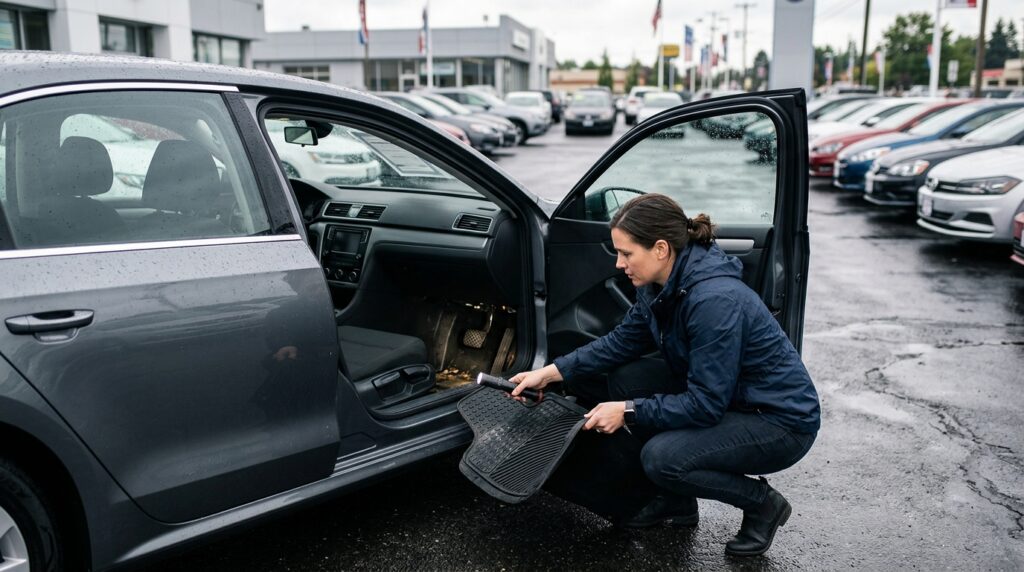
Flood-damaged used cars are one of the biggest hidden risks in the pre-owned vehicle market. A car can look clean in photos. It can smell fresh during a quick test drive. It can even have polished paint, new floor mats, and a low price that feels hard to ignore. However, water damage can hide under carpets, inside wiring, behind panels, and deep inside electronic systems.
In 2026, this warning matters even more. Many used cars now rely on advanced electronics, sensors, cameras, safety systems, infotainment modules, and software-controlled features. Because of that, flood damage is not only about wet seats or rusty bolts. It can affect safety, reliability, insurance, resale value, and long-term repair costs.
Flood-damaged used cars are not always easy to spot. Some sellers disclose the damage honestly. Others may clean the vehicle, replace visible parts, and hope buyers do not look deeper. Therefore, shoppers need a careful inspection process before signing paperwork.
This guide explains how to spot possible flood damage, what questions to ask, and when to walk away. It is written for everyday buyers who want a safer used car without getting trapped by a vehicle that looks better than it really is.
Why Flood-Damaged Used Cars Are So Risky
Flood water can damage a vehicle in several ways. First, it can enter the cabin and soak carpet, padding, seat foam, and wiring. Next, it can reach electronic modules under the seats or dashboard. In more serious cases, water can enter the engine, transmission, fuel system, brakes, or hybrid and EV battery areas.
The problem is not always visible right away. A vehicle may start and drive normally during a short test drive. However, corrosion can continue after the car dries. Electrical issues may appear weeks later. Mold can develop inside hidden padding. As a result, the buyer may discover the real damage only after the sale is complete.
NHTSA warns that vehicles affected by flood water need a thorough assessment before they are started or used again. You can read their guidance here: NHTSA hurricane- and flood-damaged vehicles guide.
That is why a low price should not be the only reason to buy. A cheap car can become expensive fast if water damage creates electrical, safety, or title problems. For more help comparing the real cost of a vehicle, read our guide on used car total ownership cost in 2026.
Water damage can hide inside modern electronics
Modern vehicles are more electronic than ever. Many have cameras, radar sensors, blind-spot monitors, lane assist, automatic emergency braking, digital dashboards, connected apps, power seats, touchscreens, and multiple control modules. These features are useful. However, they can also be expensive when water reaches them.
A flood-damaged vehicle may show small problems at first. For example, a window switch may work sometimes and fail later. A dashboard light may appear after a few days. The infotainment screen may reset. The air conditioning may smell musty. These signs are easy to dismiss, but they can point to deeper issues.
This is especially important if you are shopping for a newer vehicle with driver-assistance systems. If sensors or modules were exposed to water, the car may need more than a basic cleaning. It may need diagnosis, replacement, or recalibration. Before buying a newer model, read our guide on how to buy a used car with ADAS safety features in 2026.
Check the smell before you check the screen
Start with your nose. A musty smell is one of the most common warning signs of flood-damaged used cars. However, be careful with strong air fresheners too. Some sellers use heavy scents to cover mold, damp carpet, or old water exposure.
Sit inside the vehicle with the doors closed. Then turn on the air conditioning and heater. If the air smells damp, earthy, sour, or moldy, take it seriously. Also check the trunk, spare tire area, glove box, and under-seat areas. These spots can hold odor even when the main cabin looks clean.
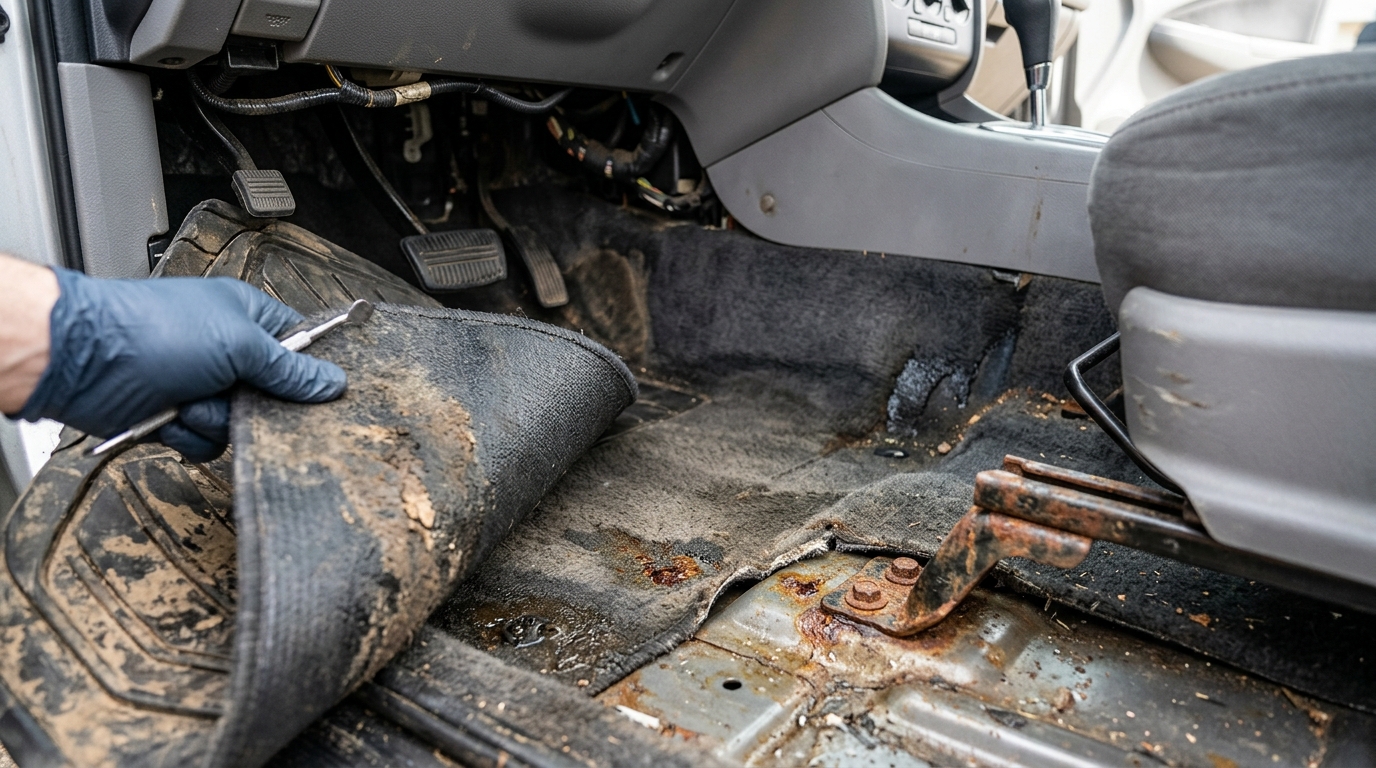
Look under carpets, mats, seats, and trunk panels
Do not only inspect what is easy to see. Lift floor mats. Check carpet edges. Look under the seats. Examine seat rails, bolts, screws, pedals, and the spare tire well. If you see rust, mud, silt, water stains, or mismatched carpet, slow down.
Also look for upholstery that seems too new compared with the rest of the car. Brand-new carpets in an older used car are not always bad. However, they should make you ask more questions. If the seller cannot explain the replacement clearly, move carefully.
Vehicle history reports help, but they are not enough
A vehicle history report is useful. It can show title brands, reported flood damage, salvage history, insurance events, odometer records, and past registrations. However, no report is perfect. Some damage may not be reported. Some vehicles may move between locations before the full history becomes clear.
That is why you should combine reports with a physical inspection. First, compare the VIN on the dashboard, title, registration, and door label. Next, check the title status. Then inspect the car in person. Finally, hire a trusted mechanic before buying.
If you are considering a certified pre-owned vehicle, documentation may be stronger. Still, CPO status does not mean you should skip your own checks. Read our guide on why certified pre-owned cars are trending in 2026 before paying extra for that label.
Watch for title problems and location history
Title history matters. A flood-damaged car may receive a branded title, salvage title, or rebuilt title, depending on the rules and the damage. However, buyers should also watch for vehicles that were registered in areas recently affected by major storms or flooding.
That does not automatically mean the car is bad. Still, it is a reason to inspect more carefully. Ask where the vehicle came from. Ask why it is being sold. Ask whether there are insurance records, repair invoices, or inspection documents. If the seller avoids clear answers, treat that as a warning sign.
How to Inspect a Used Car for Hidden Flood Damage
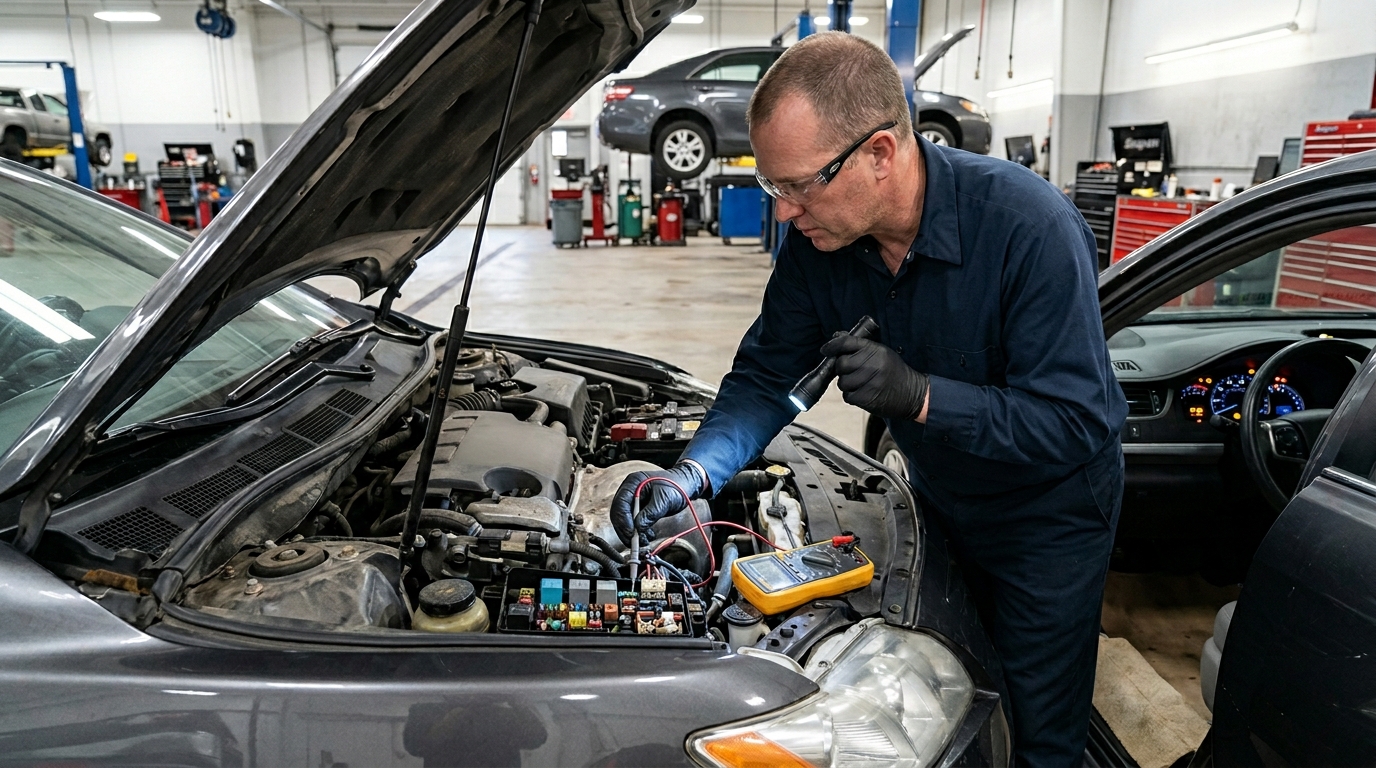
A smart inspection should follow a simple order. Start with the documents. Then inspect the exterior. After that, check the interior. Next, test the electronics. Finally, get a professional inspection. Do not rush. A flood-damaged car often reveals itself through small details.
On the outside, check headlights, taillights, and turn signals. Moisture inside the lens can be a warning sign. Also inspect the engine bay. Look for mud, unusual corrosion, water lines, or cleaned areas that look different from the rest of the car.
Inside, test everything. Turn on the lights, windows, locks, wipers, radio, backup camera, air conditioning, heater, seat controls, charging ports, and dashboard functions. Do this more than once. Electrical problems may not show up immediately.
Also pay attention during the test drive. Does the car hesitate? Do warning lights appear? Does the steering feel strange? Do the brakes feel uneven? Does the cabin smell worse after the air system runs? If something feels off, do not ignore it.
Be extra careful with hybrids, EVs, and tech-heavy vehicles
Hybrid and electric vehicles need extra caution after water exposure. High-voltage batteries, wiring, and control systems can be dangerous when damaged. NHTSA specifically warns that wet hybrid and electric vehicle batteries can involve high voltage, short circuits, shock risk, and fire risk.
Therefore, never guess with a water-damaged EV or hybrid. If there is any sign of flooding, get the vehicle inspected by a qualified technician. Also ask for battery health information, repair history, and any manufacturer service documentation. For more detail, read our guide on pre-owned electric vehicle battery health.
Software also matters. Some water-related problems can affect modules, sensors, apps, or connected features. Before buying a late-model used car, review our guide on used car OTA updates in 2026. It can help you understand why digital systems now belong on the inspection checklist.
When to walk away from the deal
Walk away if the seller refuses an independent inspection. Also walk away if the title history looks suspicious, the VIN does not match, or the car smells strongly of mold. You should also be careful if the vehicle has unexplained new carpet, rust under the dashboard, mud in hidden areas, moisture inside lights, or repeated electrical glitches.
Finally, consider insurance before buying. Some flood-damaged or rebuilt vehicles may be harder or more expensive to insure. So, get an insurance quote before signing. Our guide on used car insurance costs in 2026 explains why insurance can change the real price of a used vehicle.
Flood-damaged used cars can look like great deals. However, hidden water damage can create expensive and unsafe problems later. The best protection is a careful process. Check the documents. Inspect hidden areas. Test electronics. Review the title. Ask direct questions. Then pay for a professional inspection before you buy.
In the end, a clean-looking car is not always a clean car. A smart buyer looks beyond the shine. If the deal feels too cheap, the history is unclear, or the seller rushes you, pause. There will always be another used car. It is better to miss one deal than to own a vehicle with hidden flood damage.