
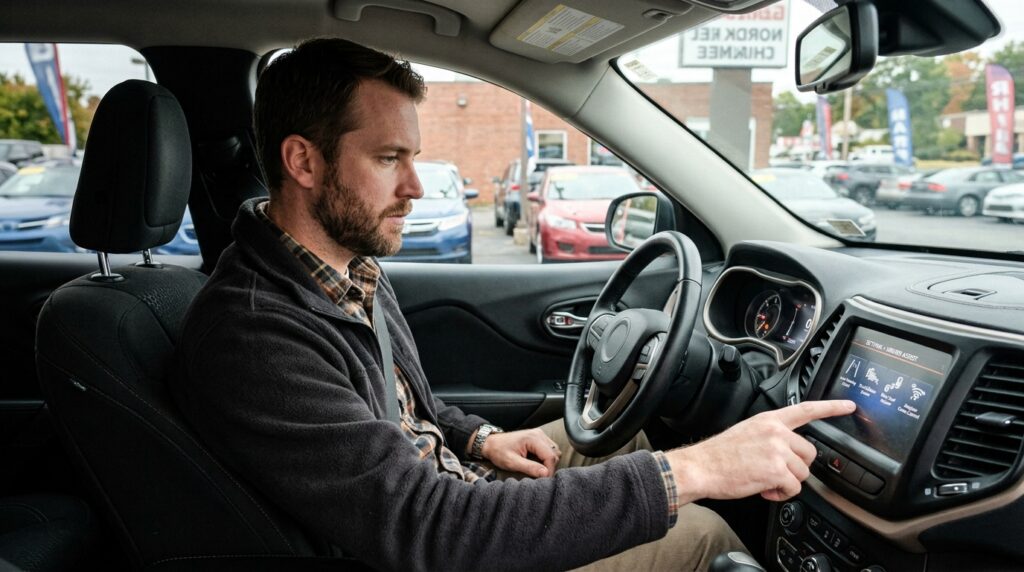
Used cars with driver-assistance tech are becoming more common in 2026, but buyers need to be careful. Features like blind spot warning, lane keeping assist, adaptive cruise control, forward collision warning, rear cross-traffic alert, parking sensors, and automatic emergency braking can make a vehicle feel more modern and safer. However, those systems are only valuable if they actually work correctly.
This is where many used-car shoppers make a mistake. They see buttons on the steering wheel, icons on the dashboard, or safety features listed in an online ad and assume the car is ready. That is not enough anymore. Modern safety systems rely on cameras, radar sensors, software, wiring, windshields, bumpers, mirrors, and calibration. If one part is damaged, replaced, dirty, blocked, or not updated, the feature may not behave as expected.
The smarter move is to test and verify the technology before paying. Driver-assistance features can be a real benefit, especially for commuters, families, and first-time buyers who want more confidence on the road. But they should not be treated like free bonus features. They should be checked like the engine, brakes, tires, transmission, title, recall status, and service history.
Why Driver-Assistance Tech Changes Used-Car Shopping
Used-car shopping used to focus heavily on mileage, accident history, engine condition, transmission feel, tire wear, and maintenance records. Those still matter. But newer used vehicles now bring another layer: electronic safety systems. A car may drive smoothly during a short test drive and still have driver-assistance problems hiding under the surface.
That matters because ADAS features depend on precision. A front camera mounted behind the windshield may help with lane keeping or forward collision alerts. Radar sensors may support adaptive cruise control or blind spot warning. Parking sensors and rear cameras may help with backing up. If a windshield was replaced, a bumper was repaired, or a mirror was changed, some systems may need proper inspection or calibration.
Before buying a newer pre-owned vehicle, review this related guide: How to Buy a Used Car With ADAS Safety Features in 2026. This article goes one step further by focusing on what to test before you hand over money.
Common features buyers should understand
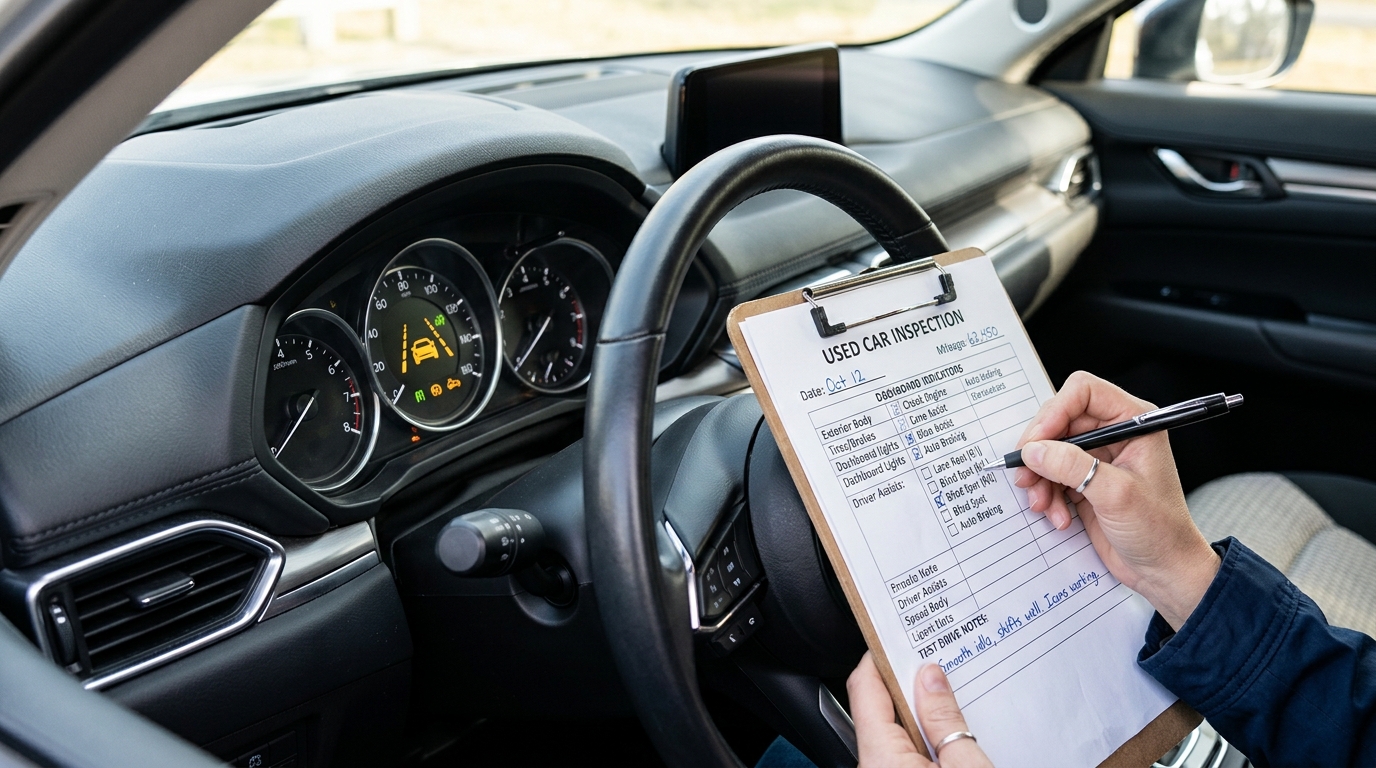
Driver-assistance technology is not one single feature. It is a group of systems that help the driver notice risks, stay centered, keep distance, brake sooner, park more easily, or avoid certain collisions. Common examples include automatic emergency braking, forward collision warning, lane departure warning, lane keeping assist, adaptive cruise control, blind spot monitoring, rear cross-traffic alert, and parking sensors.
Not every car has all of these. Not every trim level includes the same package. A seller may say the car has “safety tech,” but that phrase can mean many things. You need to know which features are actually installed on that specific vehicle.
Names differ, so test the exact feature
Automakers use different names for similar systems. One brand may call a feature lane keeping assist. Another may call it lane centering, lane support, steering assist, or driver assist. The name matters less than what the feature actually does.
During the test drive, ask the seller to show you how each feature turns on, where the settings are, and what warning icons should appear. If the seller cannot explain the system, use the owner’s manual or dashboard menu. Do not pay extra for features you cannot confirm.
Do not confuse assistance with self-driving
Driver-assistance technology does not mean the car can drive itself. Even advanced systems still require the driver to stay alert, hold responsibility, watch the road, and take over when needed. This is especially important when buying a used car because system performance can vary by brand, model year, software version, road markings, weather, and repair history.
A used car with ADAS can be helpful, but it should not make the buyer overconfident. The safest mindset is simple: these systems assist the driver. They do not replace the driver.
Why used ADAS can fail after repairs
Driver-assistance systems may become less reliable after certain repairs if the work was not completed correctly. Windshield replacement, bumper repair, front-end collision work, mirror replacement, wheel alignment, suspension damage, and electrical repairs can all affect systems that depend on sensors and cameras.
This does not mean every repaired vehicle should be rejected. Many cars are repaired properly and continue to work well. The issue is documentation. If a used car had bodywork, glass replacement, or sensor-related repairs, ask whether the systems were checked afterward. A trustworthy seller should not be offended by that question.
This is also why recall research matters. A vehicle can look fine but still need safety-related repairs or software work. Before you buy, read Used Car Recall Check in 2026 and use the VIN to verify whether the vehicle has open recalls.
Windshield and bumper repairs matter
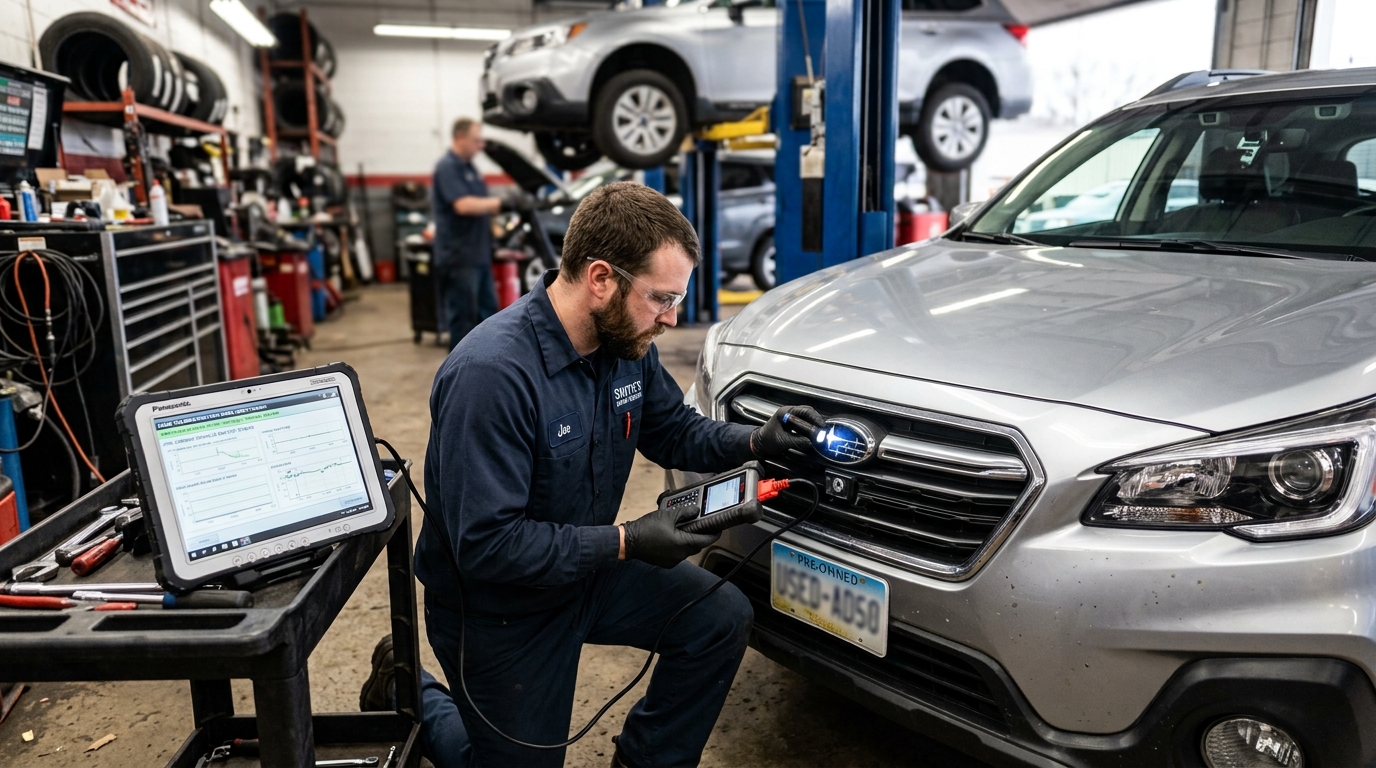
Many driver-assistance features depend on areas that buyers do not inspect closely. A front camera may sit near the rearview mirror. Radar may sit behind the grille or bumper. Blind spot sensors may be hidden in the rear corners. Parking sensors may sit inside bumper covers.
Look for signs of poor repair work, such as uneven panel gaps, mismatched paint, loose bumper edges, cracked sensor covers, warning lights, replaced windshield glass, or dashboard alerts. A clean exterior is not enough. If the car has advanced systems, the inspection should include the technology behind the panels.
What to Test Before Paying
A good test drive for a used car with driver-assistance tech should be calm, safe, and realistic. You do not need to force dangerous situations to see whether automatic braking works. Do not cut off traffic, tailgate, or create a hazard just to test a feature. Instead, focus on whether the systems turn on, show normal status, behave consistently, and do not display warnings.
Start before the drive. Turn the vehicle on and watch the dashboard. Warning lights should illuminate briefly and then go out as normal. If safety-system warnings remain, ask why. Check the infotainment menu for driver-assistance settings. Confirm whether features are enabled or disabled. Some previous owners turn systems off because they find them annoying.
Then check the vehicle history. Ask whether the windshield has been replaced, whether the vehicle had front or rear collision repairs, whether sensors were replaced, and whether software updates are current. If the car relies on connected systems or over-the-air updates, read Used Car OTA Updates in 2026.
A practical ADAS test-drive checklist
During the drive, pay attention to normal behavior. If the car has blind spot warning, watch whether the indicators activate when vehicles are in the correct area. If it has lane departure warning or lane keeping assist, check whether the system recognizes clear lane markings on a suitable road. It has adaptive cruise control, confirm that it engages properly in safe traffic conditions and maintains distance without harsh reactions.
Check the backup camera, parking sensors, and rear cross-traffic alerts in a safe parking area. The camera should be clear, not foggy, flickering, or distorted. Parking sensors should not beep randomly when nothing is nearby. Rear cross-traffic warnings should not be treated as perfect, but obvious warning errors may deserve inspection.
Also check for strange messages after the test drive. Some systems only show warnings after the vehicle moves. If the dashboard displays camera blocked, sensor unavailable, driver assist unavailable, calibration needed, or similar alerts, slow down the buying process. Those messages may be simple, but they may also point to repairs or costs.
Be extra careful with flood-damaged vehicles. Moisture can affect wiring, sensors, modules, and electronic systems in ways that are hard to see. If the price feels suspiciously low or the car smells musty, review Flood-Damaged Used Cars in 2026 before moving forward.
For external reference, NHTSA explains several driver-assistance technologies and what they are designed to do here: NHTSA Driver Assistance Technologies.
Final rule: verify features before valuing them
Driver-assistance tech can increase the appeal of a used car, but only verified features should influence what you are willing to pay. Do not pay more because an ad says the vehicle has advanced safety features unless you can confirm they are installed, working, updated, and not tied to unresolved repairs.
Final Thoughts: Used cars with driver-assistance tech can be smart buys in 2026, but shoppers need a stronger checklist. Test the systems, review repair history, check recalls, inspect sensors and cameras, and ask whether any calibration was done after glass, bumper, or collision work. Safety technology is valuable when it works correctly. When it is ignored, it can become another hidden cost. Buy the car, not the promise in the listing.