
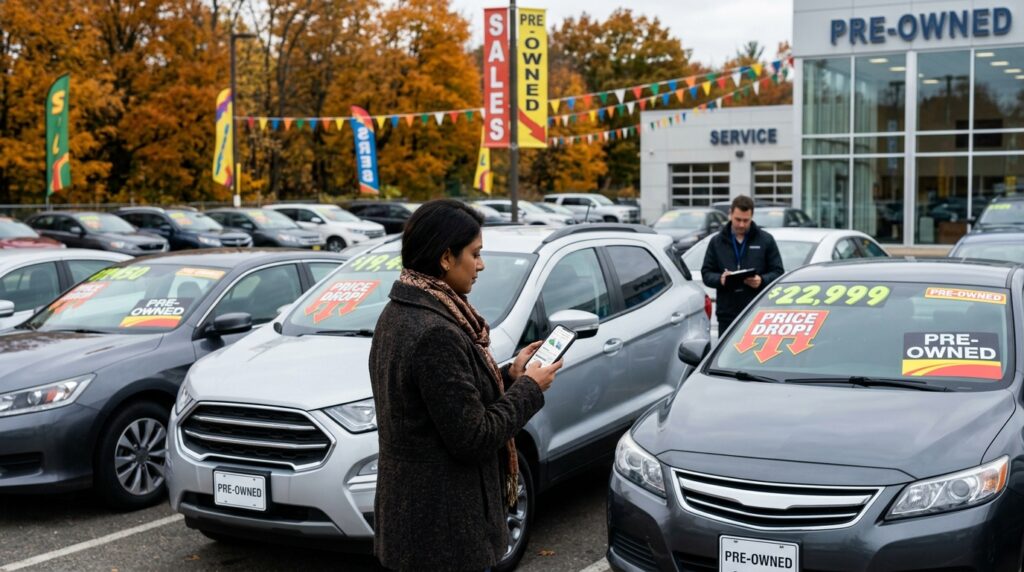
Used car prices in September 2026 gave shoppers another reason to watch the market closely. Cox Automotive reported that wholesale used-vehicle values fell again during the month.
The Manheim Used Vehicle Value Index ended September at 205.9. That marked a 1.1% drop from August after Cox adjusted for mileage, vehicle mix, and seasonal factors.
Wholesale values also slipped 0.6% from September 2025.
The change does not mean used cars suddenly became cheap. Retail prices can move more slowly than auction prices. Financing also remains expensive for many shoppers.
Still, the September numbers show a softer market than buyers saw earlier in 2026.
Cox also lowered its year-end forecast. The company now expects wholesale used values to finish 2026 only about 0.2% higher than a year earlier.
For shoppers, the big question is simple: should you buy now, or wait for prices to fall further?
What the September 2026 Used Car Price Data Actually Shows
The Manheim Used Vehicle Value Index tracks wholesale prices. Dealers, auctions, lenders, and analysts use it to understand changes in the used-vehicle market.
Consumers do not usually pay these wholesale prices directly.
However, wholesale values still matter because dealers use the same market when they buy inventory, value trade-ins, and decide how aggressively they can price vehicles.
September brought a stronger decline than the market usually sees during this part of the year.
Cox described the third quarter as a period of faster depreciation.
Wholesale Values Dropped 1.1% From August

The seasonally adjusted Manheim index fell 1.1% from August to September.
On a non-adjusted basis, wholesale prices dropped 1.3% during the month and 1.2% from a year earlier.
That is useful because it shows the weakness did not come from only one adjustment in the index.
Three-year-old vehicles also lost value faster than usual.
Cox reported a 1.7% decline in its Three-Year-Old Index during September.
Late-model used cars often matter to shoppers because they can offer newer safety features, remaining warranty coverage, and lower mileage than older vehicles.
When those vehicles depreciate faster, buyers may eventually see more competitive retail listings.
Wholesale Price Drops Do Not Reach Dealer Lots Overnight
Do not expect every dealership to cut prices by 1.1% simply because the Manheim index fell by that amount.
A dealer may have purchased a vehicle several weeks ago at a higher auction price.
The dealership may also have paid for transportation, inspection, detailing, repairs, tires, brakes, or reconditioning.
Local demand can keep certain models expensive too.
A clean hybrid, compact SUV, or reliable commuter may still sell quickly even when national prices soften.
Use the September trend as market context rather than a guaranteed discount.
Our earlier July 2026 used car price guide explains the same difference between wholesale data and retail asking prices.
The September update now shows that the cooling trend continued deeper into the year.
EVs and Gas Vehicles Are Moving in Different Directions
Not every segment followed the same pattern.
Cox reported that used EV wholesale values rose 4.3% from September 2025. They also increased 0.6% from August.
Non-EV values moved the opposite way.
Those vehicles fell 1.6% year over year and 1.7% from August.
This difference matters if you are shopping across powertrains.
Earlier in 2026, many buyers viewed used EVs as a rapidly depreciating bargain. That assumption may not apply equally to every EV now.
Demand, fuel prices, model availability, battery health, and local incentives can change the value equation.
If you are considering a higher-mileage electric model, read our high-mileage used EV guide before deciding that mileage alone makes a vehicle risky.
Inventory and Dealer Demand Can Affect Your Negotiating Power
Price is only one signal in the wholesale market.
Cox also tracks supply and sales conversion.
Wholesale supply ended September at 28 days. That was higher than a year earlier, although Cox still described the level as within normal seasonal conditions.
Sales conversion reached 55.2%.
That measure shows how much available auction inventory actually sold.
Lower conversion can suggest that buyers in the wholesale market have become more selective.
When dealers feel less pressure to chase inventory, retail shoppers may gain some negotiating room later.
More Market Weakness Does Not Mean You Should Buy the Cheapest Car
A softer market can tempt buyers to focus too heavily on discounts.
That is a mistake.
A car with a low asking price can still cost more after repairs, financing, insurance, tires, maintenance, and registration.
Compare condition before discount size.
Ask for service records. Check the title history. Look for signs of accident repairs. Confirm whether recalls remain open.
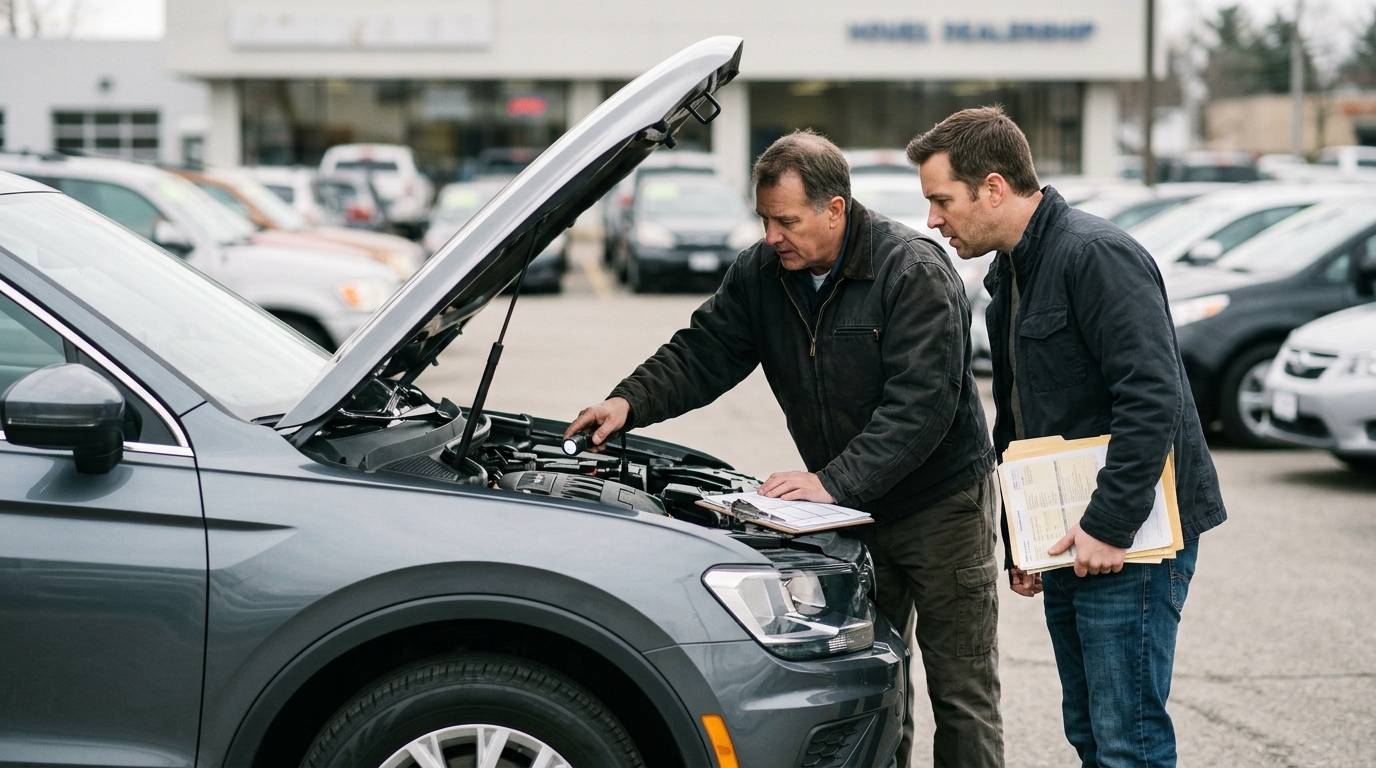
Consider a pre-purchase inspection when the vehicle and seller allow it.
Our used car total ownership cost guide explains why a slightly more expensive vehicle can become the cheaper option over several years.
Should You Buy a Used Car Now or Wait Until Later in 2026?
The September numbers support patience, but they do not guarantee another large price drop.
Used-car values react to many forces.
Interest rates, fuel prices, trade-in supply, lease returns, new-car incentives, consumer confidence, and local inventory can all change the market.
Cox lowered its 2026 year-end wholesale forecast to roughly 0.2% growth from the previous year.
That suggests a much flatter market than the company expected earlier in the year.
Still, predicting the exact lowest week is almost impossible.
Buy When the Vehicle and the Full Deal Make Sense
A buyer who needs dependable transportation now may not benefit from waiting several months to save a few hundred dollars.
Transportation has value too.
If your current car needs major repairs, creates safety concerns, or threatens your ability to work, waiting for the perfect market bottom may cost more than it saves.
On the other hand, shoppers without an urgent deadline can track several vehicles and wait for a stronger deal.
Create a shortlist rather than falling in love with one listing.
Compare the same model across several dealers. Match trim, mileage, condition, and equipment as closely as possible.
Watch those listings for price changes.
A vehicle that has remained unsold for several weeks may offer better negotiating room than a popular model that arrived yesterday.
Use Price Trends to Negotiate, Not to Predict the Future
Market data works best as a negotiating tool.
Show that comparable vehicles have softened. Ask whether the dealer can improve the selling price.
Then move beyond price.
Review the financing rate, loan term, dealer fees, optional products, trade-in allowance, and down payment.
A $1,000 discount can disappear quickly if the loan carries a much higher APR.
Our used car financing guide explains why shoppers should compare the full repayment cost instead of focusing only on the monthly payment.
Insurance deserves attention as well.
Two cars with similar purchase prices can produce very different premiums. Get quotes before signing whenever possible.
You can use our used car insurance cost guide to build that number into your budget.
The used car prices September 2026 report gives shoppers better news than the market offered earlier this year.
Wholesale values fell 1.1% from August. Non-adjusted prices also moved lower, while three-year-old vehicles experienced faster depreciation.
Cox lowered its year-end outlook too.
Those numbers suggest that pricing pressure is easing.
They do not guarantee a bargain on every dealership lot.
The smartest buyer still compares several vehicles, checks history and condition, gets financing quotes, and looks at total ownership cost.
If you find a clean vehicle at a competitive price with affordable financing, you may not need to wait for another national index report.
If the deal feels expensive, the softer market gives you another reason to walk away and keep shopping.
For the latest national benchmark, review the Cox Automotive September 2026 Manheim Used Vehicle Value Index report.