
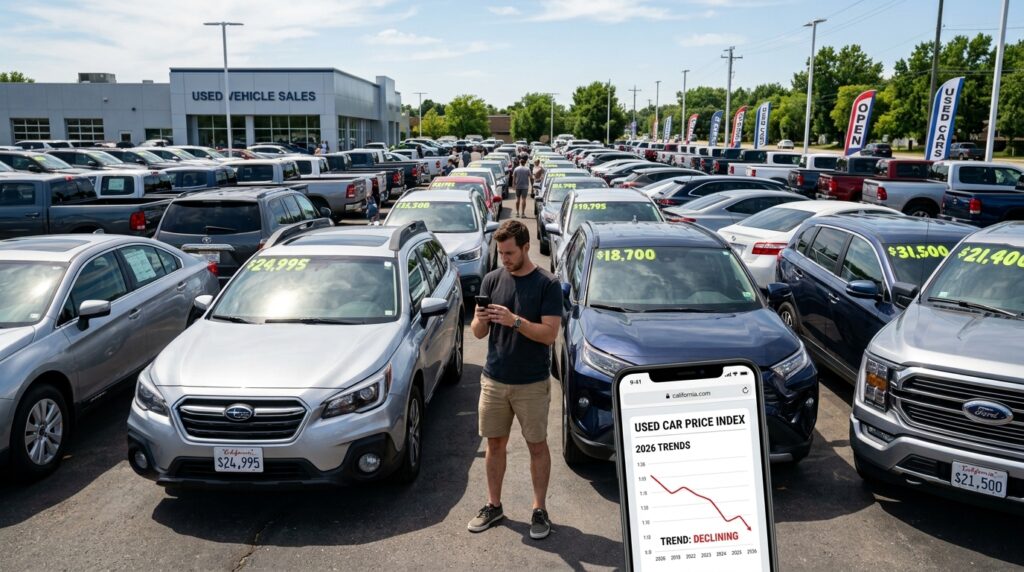
Used-car shoppers have spent much of 2026 dealing with a difficult market. Prices remain high, financing can still be expensive, and affordable vehicles are often the hardest ones to find.
The latest market data finally gives buyers some better news.
Cox Automotive reported in August that wholesale used-vehicle values fell 1.4% from June to July 2026. The Manheim Used Vehicle Value Index ended July at 210.
Prices were still 1.3% higher than they were a year earlier. So, this is not a used-car market crash. Still, the monthly decline suggests that some of the pricing pressure seen earlier in 2026 is starting to ease.
That does not mean every dealer will lower prices immediately. Wholesale and retail prices move differently. However, softer wholesale values can eventually give buyers more choices and possibly more negotiating room.
If you plan to finance your purchase, price is only one part of the deal. Our used car financing guide for 2026 explains why a low monthly payment can still hide an expensive loan.
Why Used Car Prices Are Cooling in Summer 2026
The used-car market started 2026 with strong pricing. Affordable inventory remained limited, while high new-car prices pushed many budget-conscious shoppers toward pre-owned vehicles.
July brought a noticeable change.
Cox Automotive reported that adjusted wholesale prices declined 1.4% from June. Non-adjusted wholesale prices fell 2.6% during the same period.
Late-model vehicles also experienced more depreciation. Prices in Manheim’s three-year-old vehicle index dropped 2.8% during July.
For shoppers, those numbers are worth watching because wholesale prices affect what dealers pay to acquire inventory. Lower acquisition costs can eventually influence retail pricing.
What the July Manheim Index Actually Shows
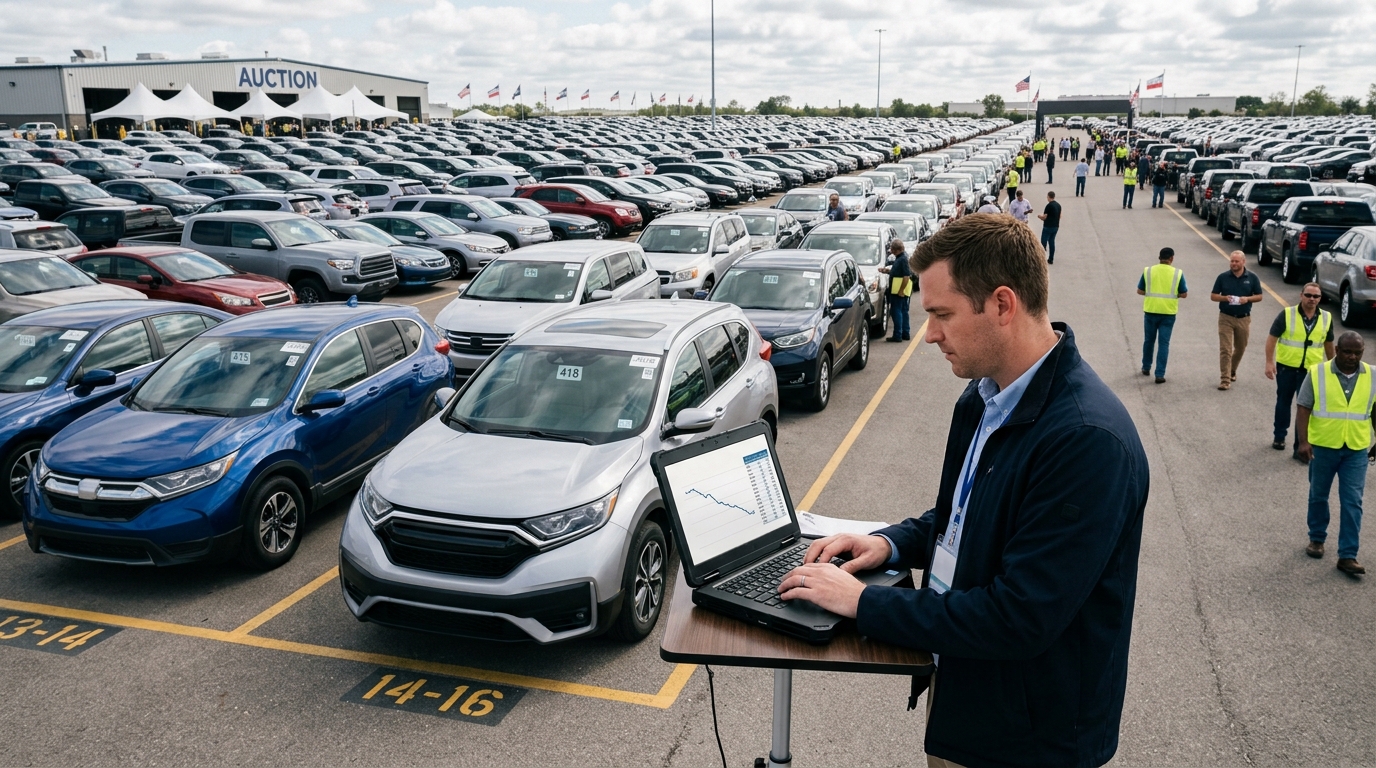
The Manheim Used Vehicle Value Index tracks wholesale used-car values. These are the prices in the dealer and auction side of the market, not necessarily the advertised prices consumers see online.
The index adjusts for factors such as mileage, vehicle mix, and seasonality. That makes it useful for tracking changes across the larger used-car market.
In July 2026, the index reached 210. Cox Automotive said that was roughly 2.5% below the market’s March high.
The year-over-year increase also became smaller. June values had been 2.1% above the prior year, while July was 1.3% higher.
This suggests that the market is normalizing after stronger pricing earlier in the year.
Wholesale Prices Are Not the Same as Dealer Sticker Prices
Do not see a 1.4% wholesale decline and automatically expect every dealer to reduce a vehicle’s price by 1.4%.
A dealer may have purchased a car weeks or months ago at a higher cost. The dealership may also have paid for transportation, inspection, detailing, tires, brakes, repairs, or other work.
Local demand also matters. A popular used model can remain expensive in one city even when national wholesale prices are falling.
Use the market trend as negotiating context instead.
Compare several examples of the same year, model, trim, mileage range, and condition. Look at how long each vehicle has been listed. A car that has remained unsold for weeks may provide more negotiating room than a desirable model that arrived yesterday.
More Three-Year-Old Cars Could Give Buyers Better Choices
One of the more useful July trends involves late-model used vehicles.
Cox Automotive reported that its three-year-old vehicle index fell 2.8% during July. The company also noted that off-lease maturities continued to grow.
Lease returns can add relatively new vehicles to the used market. Many are around three years old and may have predictable mileage and service history.
More inventory does not guarantee low prices. However, additional supply can reduce the pressure to buy the first acceptable car you find.
That can be especially helpful when comparing sedans, crossovers, and certified pre-owned vehicles.
Still, newer does not automatically mean trouble-free. Check maintenance history, accident history, tires, brakes, software, and open recalls before buying.
Our used car recall check guide explains why buyers should search the exact VIN instead of relying only on general make-and-model research.
Which Used-Car Segments May Offer Better Value?
The July market did not move equally across every vehicle type.
Cox Automotive reported that compact cars remained relatively strong compared with the previous year. Pickups and SUVs showed more weakness, while softer pricing also began to appear among midsize cars.
That matters because buyers may see very different negotiating conditions depending on what they are shopping for.
Affordable compact cars often attract shoppers who want lower fuel and ownership costs. Strong demand can help those vehicles hold their value.
Larger pickups and SUVs can be more expensive to buy and operate. When buyers become more focused on affordability, demand for some of those vehicles can soften.
Softer SUV and Pickup Prices Do Not Automatically Make Them Better Deals
A lower market price only helps when the vehicle fits your needs and budget.
Buying a large SUV because prices have softened makes little sense if you really need an inexpensive commuter. Fuel, tires, insurance, maintenance, and financing could erase the purchase-price savings.
Instead, compare vehicles based on the job they need to perform.
A family shopping for an SUV can compare several models with similar space and safety equipment. A commuter can compare efficient sedans, compact crossovers, and hybrids.
Think about the total ownership cost rather than chasing the biggest discount.
How to Shop if Used Car Prices Keep Easing

A cooling market can reward patience, but trying to predict the exact bottom can become another mistake.
Used-car prices can change with inventory, interest rates, fuel costs, seasonal demand, new-car incentives, and local market conditions.
No buyer can know with certainty which week will have the lowest prices.
A better approach is to create a repeatable shopping process.
Set your total budget first. Compare financing before visiting the dealership. Research several similar vehicles. Get insurance quotes. Review vehicle history and recalls. Consider an independent pre-purchase inspection when appropriate.
Build the Deal Around Total Price, Financing, and Condition
The buyer who gets the largest sticker-price discount does not always get the best deal.
Imagine one vehicle costs $1,000 less but needs four tires and has incomplete service records. Its insurance premium is also higher. Another vehicle costs slightly more but has good maintenance records, newer tires, a clean inspection, and better financing.
The second vehicle could easily cost less over the next few years.
Before signing, review:
- Selling price and dealer fees
- Loan APR and term
- Insurance cost
- Maintenance and repair history
- Tire and brake condition
- Open safety recalls
- Accident and title history
- Expected fuel or charging costs
A $500 discount means very little if a poor loan costs thousands more in interest.
This is why our used car total ownership cost guide is a useful companion when comparing vehicles.
Do Not Wait for the Perfect Bottom—Use Vehicle-Specific Data
July’s decline is encouraging, but it does not guarantee that used-car prices will fall every month for the rest of 2026.
The smarter move is to track the vehicles you actually want.
Save several comparable listings. Watch for price reductions. Note how long each vehicle remains for sale. Compare mileage, trim, condition, maintenance, and included features.
If a dealer reduces one vehicle while similar models remain unsold nearby, you have stronger information for negotiating.
At the same time, be ready to act when a genuinely good vehicle appears. The cheapest listing is not always the best used car.
A clean history, strong maintenance records, reasonable mileage, good tires, correct equipment, and a professional inspection can justify paying slightly more.
For the latest market benchmark, buyers can review the Cox Automotive July 2026 Manheim Used Vehicle Value Index report.
The July numbers give buyers a reason to be more optimistic. Wholesale values fell 1.4% from June, three-year-old vehicle prices declined more sharply, and additional lease returns are adding vehicles to the market.
At the same time, wholesale prices remain higher than they were one year ago. That points to a market that is cooling rather than collapsing.
For used-car shoppers, the coming months may bring better opportunities. Softer wholesale prices and more inventory can improve negotiating conditions.
Still, one national price index should never decide whether you buy a particular car.
Choose a reliable vehicle that fits your needs. Verify its history and condition. Compare financing and insurance. Negotiate using real local listings rather than headlines alone.
A falling market can help you get a better deal. A disciplined buying process is what helps you avoid an expensive mistake.