

Used car financing in 2026 can help buyers get into a reliable vehicle without paying the full price upfront, but it can also create expensive mistakes if the deal is judged only by the monthly payment. A used car may look affordable when the payment fits your budget, but the full cost can change once interest, loan length, insurance, taxes, fees, maintenance, and add-ons are included.
This is why smart used-car buyers need to slow down before signing. The goal is not just to get approved. The goal is to understand the total cost of the vehicle and choose a loan that still makes sense after the excitement of the test drive wears off. A lower payment can feel helpful today, but a longer loan may cost more in interest and keep you paying for the car after its value has dropped.
Pre-owned vehicles are still attractive because they can offer better value than buying brand new. However, financing pressure is real. Buyers are comparing prices harder, stretching budgets, and trying to protect themselves from overpaying. If you are shopping this year, focus on the full deal—not just the number the salesperson says you can pay each month.
Why Used Car Financing Needs Extra Attention in 2026
Used car financing matters more in 2026 because affordability is still one of the biggest concerns for vehicle shoppers. Many buyers are choosing pre-owned cars because new vehicles feel expensive, but used-car loans can still become costly when rates are high or terms are stretched too long. A used car is not automatically a good deal just because it is cheaper than a new one.
The monthly payment is often the first number buyers notice. It is simple, emotional, and easy to understand. If the payment looks manageable, the deal may feel safe. But that number can hide important details. A long loan term can lower the monthly payment while raising the total interest paid. Add-ons can be rolled into the loan and quietly increase the balance. A small difference in rate can cost hundreds or thousands over time.
This is why used-car shoppers should compare the vehicle price, loan term, interest rate, fees, add-ons, and total repayment amount before deciding. A payment that feels comfortable should still be tested against the total cost of ownership. For a deeper look at ownership expenses, read Used Car Total Ownership Cost in 2026.
The monthly payment is only one part of the deal

A monthly payment tells you what leaves your bank account each month, but it does not tell you whether the car is priced fairly, whether the interest rate is competitive, or whether the loan term is too long. Two buyers can have the same monthly payment and still end up with very different total costs.
For example, a lower monthly payment over a longer term may look easier now, but it can keep you in debt longer. It may also increase the risk of owing more than the vehicle is worth. That becomes a problem if you want to trade in, sell, refinance, or if the car is totaled after an accident.
A longer loan can make a car look cheaper than it is
Longer loan terms are attractive because they reduce the payment. That can help buyers qualify for a vehicle they might not otherwise afford. The downside is that interest has more time to build. The vehicle also keeps aging while the loan balance remains high.
If you need a very long loan to make the payment work, the car may be too expensive for your budget. A better move may be choosing a lower-priced vehicle, increasing the down payment, improving credit before buying, or comparing financing offers before accepting the first option.
Add-ons can quietly increase the financed amount
Used car financing can also become expensive when optional add-ons are added to the loan. These may include extended warranties, service contracts, protection packages, gap coverage, tire-and-wheel plans, or other products. Some may be useful in the right situation, but they should never be accepted automatically.
Ask what each add-on costs, whether it is optional, whether it can be purchased later, and how much it changes the total loan amount. If an add-on is rolled into the financing, you may pay interest on it too. That means a product that sounds small can cost more over the life of the loan.
Why pre-approval can give buyers more control
Getting pre-approved before shopping can help you understand your real budget. It gives you a rate and loan amount to compare against dealer financing. It also helps you avoid making decisions under pressure while sitting at the dealership desk.
Pre-approval does not mean you must use that lender. It gives you a baseline. If the dealership can beat the offer with better terms, that may be worth considering. If not, you already have another option. This makes the conversation more balanced because you are not relying on one financing source.
Before shopping, compare offers from banks, credit unions, online lenders, and dealer financing when available. Look at the annual percentage rate, loan term, monthly payment, total finance charge, and total amount paid. Do not compare payment alone.
Compare loan offers before comparing upgrades
Many buyers spend more time comparing trim levels than loan terms. That is backwards. A better stereo, larger wheels, or extra features can feel exciting, but a bad loan can hurt your budget for years. Financing should be reviewed before emotional upgrades are added.
Once you know your financing range, you can shop with discipline. You will know which cars fit your real budget and which ones only fit after stretching the loan too far. This makes it easier to walk away from a deal that looks attractive but does not make financial sense.
How to Finance a Used Car Without Overpaying
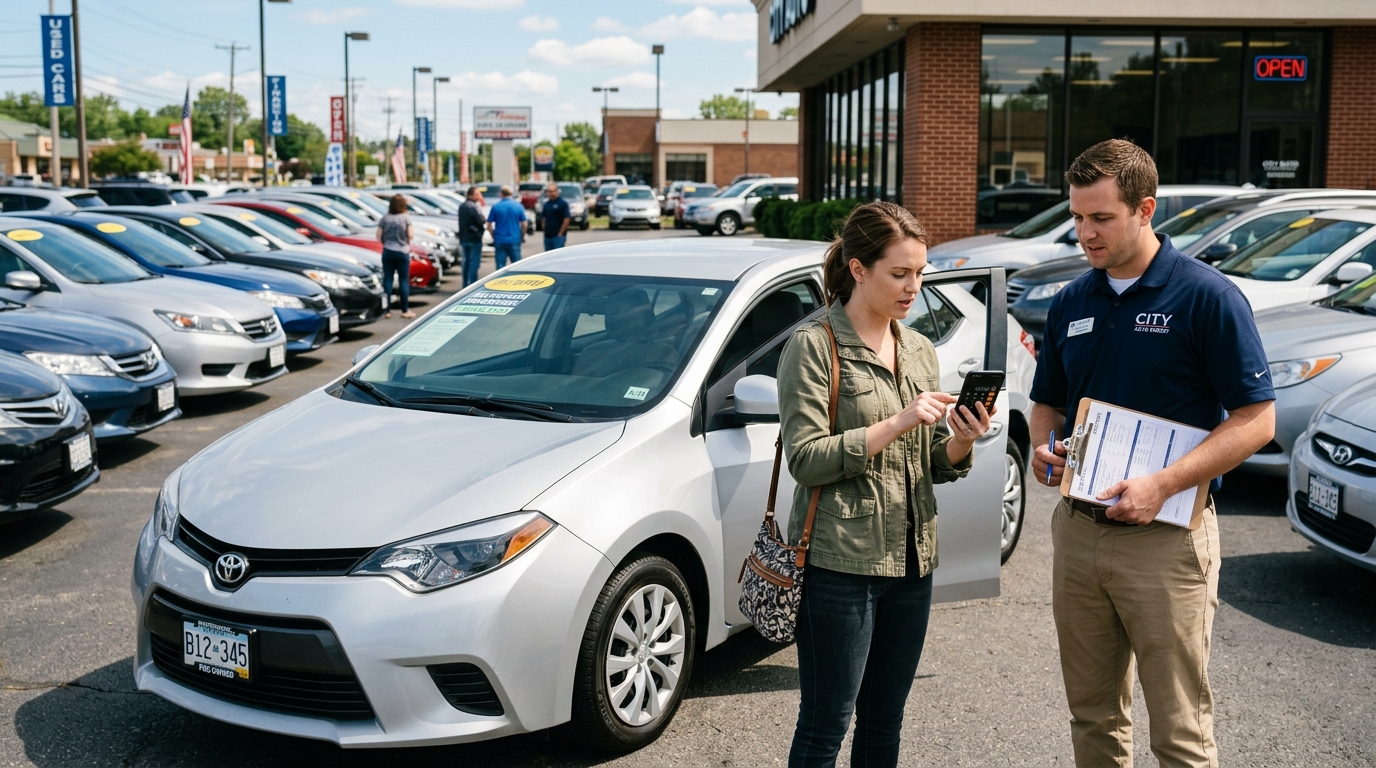
The safest way to finance a used car is to build your budget before choosing the vehicle. Start with the amount you can comfortably spend each month, but do not stop there. Add insurance, fuel, maintenance, registration, tires, parking, and possible repairs. A car payment that looks fine by itself may become stressful after the other costs are added.
Insurance is especially important. Some vehicles cost more to insure because of repair costs, theft risk, safety ratings, model history, or driver profile. Before finalizing a purchase, get insurance quotes for the exact vehicle or at least the same year, make, and model. For more guidance, read Used Car Insurance Costs in 2026.
Also think about trade-in equity. If you owe more on your current car than it is worth, rolling that debt into the next loan can make the new deal dangerous. It may feel convenient, but it increases the financed balance and can put you underwater again. This is covered in more detail in Negative Equity Car Loan in 2026.
A practical financing checklist before signing
Before signing, confirm the selling price, down payment, trade-in value, interest rate, loan term, monthly payment, total finance charge, total amount paid, taxes, fees, and optional add-ons. Ask for a clear explanation of anything you do not understand. If the numbers changed from what you discussed earlier, stop and ask why.
Do not let the conversation stay only on payment. Ask, “What is the total cost if I make every payment?” Ask whether there is a prepayment penalty. Ask whether optional products can be removed. Ask whether the rate depends on buying add-ons. Ask whether the paperwork matches the exact vehicle you test-drove.
Certified pre-owned vehicles can be a good middle ground for some buyers because they may include inspections, warranty coverage, and better confidence than a typical used car. However, they still need smart financing. A CPO badge does not make a bad loan good. If you are considering one, read Why Certified Pre-Owned Cars Are Trending in 2026.
For official consumer guidance on auto loans, review the Consumer Financial Protection Bureau’s auto loan resources here: CFPB Auto Loans.
Final rule: buy the loan and the car together
The best used-car deal is not only about finding a clean vehicle. It is about matching the right car with the right financing. A reliable car with a bad loan can still become a financial burden. A fair loan on the wrong car can still become expensive if the vehicle needs repairs, carries high insurance costs, or does not fit your needs.
Final Thoughts: Used car financing in 2026 requires more discipline than simply chasing a low monthly payment. Compare loan offers, understand the full repayment cost, check insurance quotes, avoid unnecessary add-ons, and be careful with long terms. The smartest buyers look beyond approval and ask whether the entire deal still works six months, two years, and five years later. A good used car should give you dependable transportation, not trap you in a payment that quietly costs more than expected.