
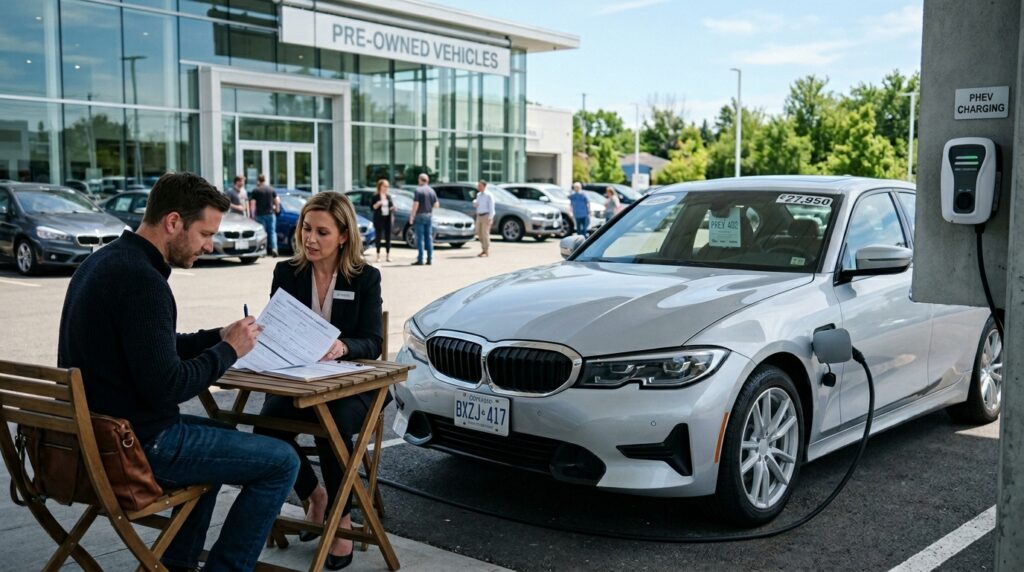
Used plug-in hybrid cars 2026 shoppers are considering deserve more attention this year. Many drivers want better fuel savings, but they do not want to jump straight into full electric vehicle ownership. Charging access still matters. Budget still matters. Daily routine still matters. That is where a used plug-in hybrid, also called a PHEV, can make sense.
A plug-in hybrid gives buyers two useful options in one vehicle. It can run on electricity for shorter trips when charged. It can also use gasoline when the battery runs low or when the driver needs longer range. For many used car buyers, that balance feels practical. They can reduce fuel use without depending completely on public charging stations.
This trend fits the current car market. Fuel costs, high vehicle prices, financing pressure, and EV hesitation are pushing shoppers to look harder at efficient pre-owned options. A regular hybrid already helps many buyers save money. A plug-in hybrid may go one step further for the right driver. The key phrase is “right driver.” A PHEV only pays off when the buyer understands how it works, how often they can charge, and what to inspect before signing.
Why Used Plug-In Hybrids Are Getting Attention in 2026
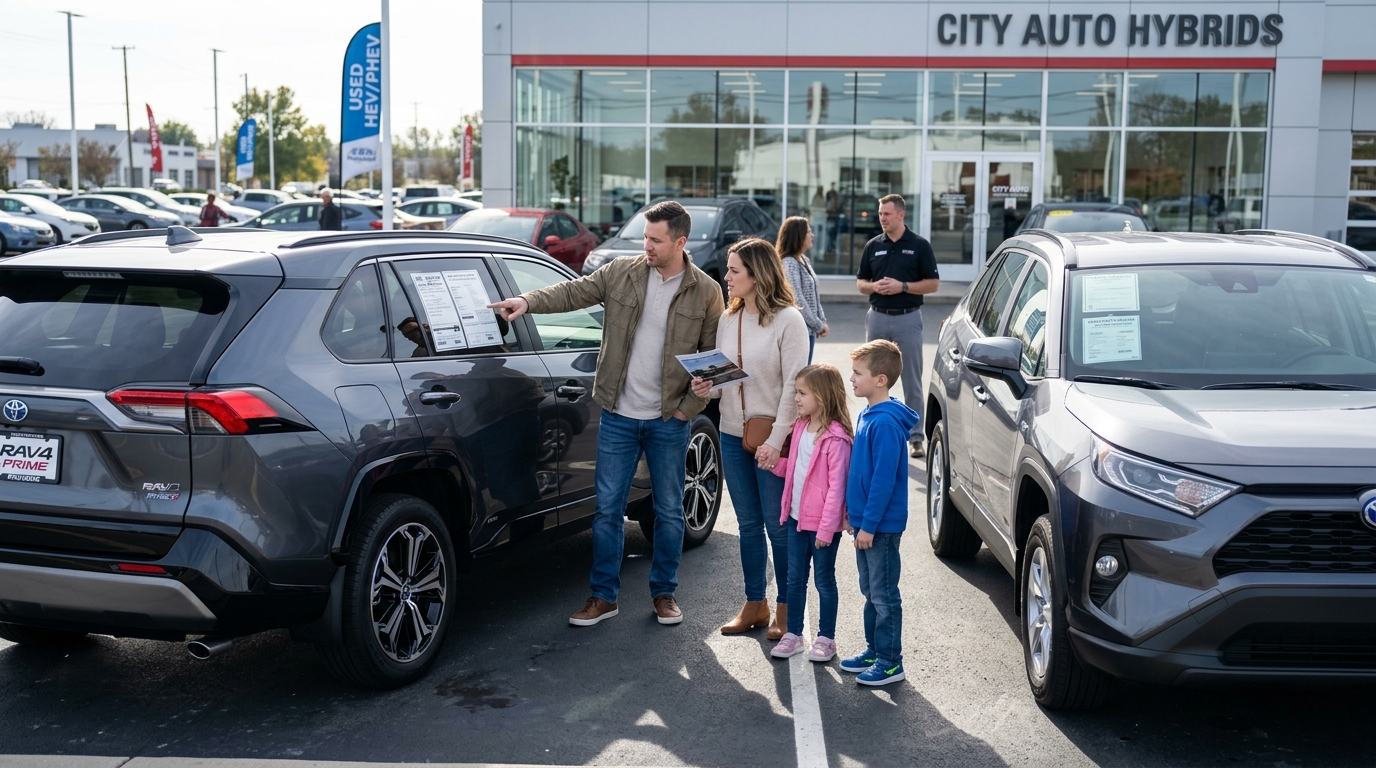
Car buyers in 2026 are more careful than they were a few years ago. Many shoppers no longer chase the newest badge or biggest screen first. They want a car that lowers real costs. They also want fewer surprises after purchase. That makes fuel economy, battery condition, software features, and total ownership cost more important.
Used plug-in hybrid cars 2026 buyers see on the market can appeal to people who feel stuck between two choices. A gas-only car may feel familiar, but fuel costs can hurt. A full EV may offer lower charging costs, but home charging, range planning, and battery health can feel intimidating. A plug-in hybrid sits in the middle.
For a broader hybrid buying mindset, Presta Cars already covers why used hybrids are booming in 2026. This guide goes deeper into plug-in hybrids because they add one extra layer: charging.
Fuel Prices Are Pushing Buyers Toward Efficient Options
Fuel prices can change buyer behavior fast. When drivers feel every fill-up, they start comparing vehicles differently. A large gas-only SUV may still look attractive on the lot. However, the long-term fuel bill can make it harder to justify.
A plug-in hybrid can help the right buyer reduce gasoline use during normal daily driving. Short commutes, school runs, grocery trips, and city errands may use mostly electric power when the car starts with a charged battery. Longer trips still work because the gasoline engine can take over.
That flexibility gives PHEVs one major advantage over full EVs. The driver can still travel without worrying as much about charger location. That does not mean a PHEV works for everyone. It works best when the owner charges it regularly. A buyer who never plugs it in may lose much of the benefit.
Regular Hybrid vs Plug-In Hybrid vs EV
A regular hybrid does not need external charging. It uses the engine, battery, and regenerative braking to improve fuel economy. That makes it simple for buyers who want better mileage without changing habits.
A plug-in hybrid has a larger battery than a regular hybrid. The owner can charge it from an outlet or charging station. When charged, it can drive some distance on electric power before using gasoline.
A full EV removes the gasoline engine completely. That can lower fuel and maintenance costs for some owners. However, it also requires stronger charging confidence. Buyers must think about home charging, public charging, range, battery health, and driving habits.
The U.S. Department of Energy’s FuelEconomy.gov explains that plug-in hybrids can reduce petroleum use when drivers charge them and use electric miles often. For more technical background, see this official plug-in hybrid guide from FuelEconomy.gov.
Why The Used Market Makes PHEVs More Interesting
New plug-in hybrids can cost more than regular gas or hybrid models. That higher price can scare off budget buyers. The used market changes the conversation. A pre-owned PHEV may offer the same efficiency benefits at a lower entry price.
However, a lower price does not automatically mean a better deal. Buyers still need to inspect the battery, charging equipment, service history, tires, brakes, software functions, and overall condition. A cheap PHEV with missing records can become expensive fast.
This is why shoppers should compare more than the sticker price. A lower monthly payment may look good, but ownership cost tells the real story. Presta Cars explains this well in its guide to used car total ownership cost in 2026.
What To Check Before Buying A Used Plug-In Hybrid
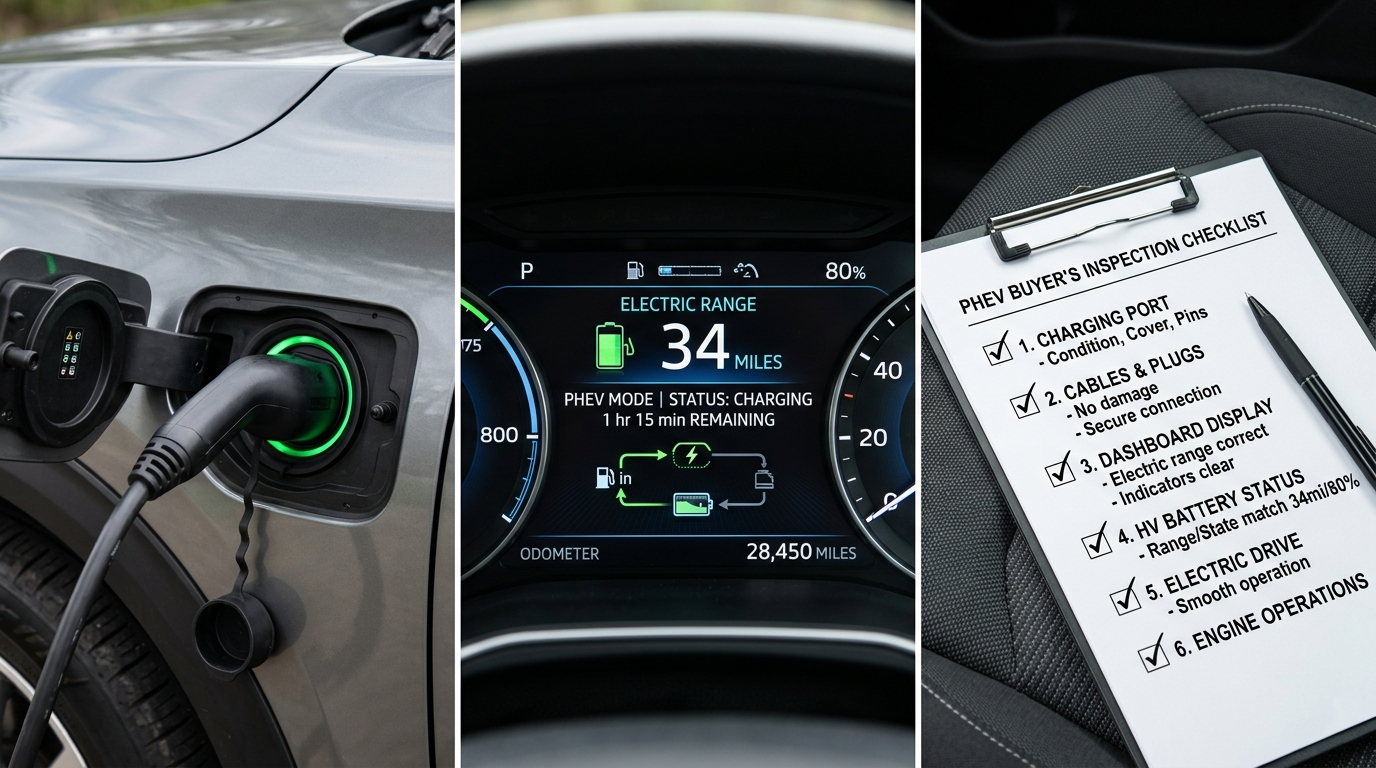
Buying a used plug-in hybrid requires a sharper inspection process than buying a basic gas car. You still need to check the normal items. Look at mileage, service records, tires, brakes, suspension, accident history, and interior condition. Then add PHEV-specific checks.
Start with the battery and charging system. Ask how much electric range the vehicle shows after a full charge. Compare that number with the model’s expected range. Some battery loss can happen over time, but a major drop needs attention.
Next, check whether the charging cable comes with the car. A missing charger adds cost right away. Also inspect the charging port. Look for damage, corrosion, loose parts, or warning lights. Test the charging process if possible. Do not rely only on the seller’s promise.
Battery, Charging Cable, And Service Records
The battery does not need to be perfect, but it needs to be understood. Ask for diagnostic information when available. A pre-purchase inspection can help identify stored codes or warning signs that a casual test drive may miss.
Service records matter even more with a PHEV. A plug-in hybrid still has a gasoline engine. It also has an electric drive system. That means the vehicle needs proper maintenance on both sides. Oil changes, coolant service, brake checks, software updates, and recalls all matter.
If you are comparing a plug-in hybrid with a full electric vehicle, read Presta Cars’ guide on pre-owned electric vehicle battery health. The systems differ, but the inspection mindset is similar. Battery condition can affect value, confidence, and long-term ownership cost.
Also check driver-assistance features. Many newer plug-in hybrids include cameras, sensors, adaptive cruise control, lane support, and automatic braking. These features can help safety, but repairs can get expensive after collisions or poor calibration. Before buying a newer model, review this guide on buying a used car with ADAS safety features in 2026.
How To Decide If A PHEV Fits Your Real Driving Life
A plug-in hybrid should fit your daily routine, not just your idea of a smart car. The best buyer for a PHEV usually has a predictable drive pattern. They may commute locally, run short errands, and have access to charging at home or work. In that case, the vehicle can use electric miles often.
A weak match looks different. If you live somewhere with no easy charging, drive mostly long highway trips, or rarely plug in, a regular hybrid may serve you better. You would still get strong fuel economy without paying extra for plug-in hardware you barely use.
Families should also compare body style and cargo space. Some PHEVs lose storage room because of battery placement. Others remain practical enough for daily use. If you need more space, compare your options with this Presta Cars guide to best used hybrid SUVs in 2026.
Match The Car To Your Daily Route And Budget
Before buying, write down how you actually drive. How many miles do you travel on a normal weekday? Can you charge overnight? Do you park in a garage, driveway, apartment lot, or street space? How often do you take long trips? These answers matter more than the sales pitch.
A PHEV may work well if your daily route fits within its electric range. You could handle many short trips with little gasoline use. Then, when you need a longer drive, the gas engine keeps the car flexible.
However, you should avoid paying extra just because the vehicle sounds advanced. Technology only helps when it matches your life. If a regular hybrid gives you similar savings with less complexity, that may be the smarter purchase.
Use Total Cost, Not Just Monthly Payment
Monthly payment can hide the real cost of a vehicle. A used plug-in hybrid may save fuel, but the deal still needs to make financial sense. Compare purchase price, loan rate, insurance, fuel cost, charging cost, maintenance, tires, battery condition, and expected resale value.
Also think about market pressure. Tariffs, affordability concerns, supply issues, and shifting demand can affect used car prices. Presta Cars covers this broader issue in its guide on used car market trends in 2026.
Used plug-in hybrid cars 2026 shoppers are considering can be a smart move. They offer fuel savings, electric driving for short trips, and gasoline backup for longer drives. That mix can feel ideal for buyers who want efficiency without full EV dependence.
Still, the best PHEV is not always the cheapest listing. The right choice has clean records, strong battery health, working charging equipment, no major warning lights, and a price that fits your budget. A careful buyer should test the charging system, review service history, compare total cost, and get a proper inspection before committing.
The bottom line is simple. A used plug-in hybrid can be the smart middle ground in 2026, but only when the buyer charges it regularly and buys it carefully. Choose based on your real driving life, not hype. That is how you turn a fuel-saving trend into a smart long-term purchase.