
Title washing generally refers to attempts to conceal a vehicle’s negative title history, such as a salvage or flood brand, through improper documentation or transactions across jurisdictions.
Vehicle identification number fraud creates another concern. If a VIN has been altered or misused, buyers may encounter difficulties establishing the vehicle’s history and legal identity.
Fortunately, shoppers can take practical steps to investigate a vehicle before agreeing to buy it.
This guide explains how title branding works, what the National Motor Vehicle Title Information System can reveal, and why an independent inspection remains essential.
Used Car Title Washing: How Vehicle History Can Be Misrepresented
Every U.S. state maintains vehicle titling procedures that help establish ownership and record particular conditions affecting a vehicle.
However, title terminology and administrative rules vary among states.
That creates a need for buyers to investigate a vehicle’s history across jurisdictions rather than relying only on the title document currently shown by the seller.
Understanding Salvage, Rebuilt, and Flood Title Brands
Title brands are designations applied by state motor vehicle agencies under applicable rules.
They may identify circumstances such as severe damage, salvage status, rebuilding, or flood exposure.
What a Salvage or Rebuilt Title May Tell You
A salvage title commonly indicates that a vehicle experienced circumstances meeting a state’s salvage classification requirements.
Those circumstances may involve substantial collision damage or an insurance total-loss determination.
However, the specific criteria differ by state.
A rebuilt title may indicate that a previously salvage-classified vehicle underwent repairs and fulfilled certain requirements for returning to road use.
That does not mean every repaired component has the same condition as a comparable vehicle without prior major damage.
Nor does a rebuilt designation automatically mean a vehicle is unsafe in all circumstances.
The important questions involve the quality of repairs, structural condition, safety systems, and applicable registration requirements.
Buyers should request documentation describing the reason for the brand and the work performed afterward.
Pay particular attention to airbags, structural components, electrical systems, and any required state inspections.
A history report can identify recorded events, but a qualified mechanic or collision repair specialist may be needed to evaluate the vehicle’s actual condition.
How Title Washing Can Hide Previous Damage
Title washing occurs when someone improperly attempts to remove or conceal a negative title designation.
The problem can arise when a vehicle changes hands or jurisdictions and its history is not accurately represented.
For example, a buyer might encounter an attractive listing for a vehicle that previously sustained substantial damage.
If the seller presents it as having a clean history without disclosing an existing title brand, the buyer may be misled about its condition or value.
However, a vehicle registered in multiple states is not automatically fraudulent.
People relocate, sell vehicles across state lines, and change registration locations for legitimate reasons.
The warning sign is an unexplained inconsistency between documents, records, and the seller’s description.
The federal National Motor Vehicle Title Information System, or NMVTIS, helps consumers investigate reported title brands and related vehicle history.
Its purpose includes reducing fraud associated with vehicles whose history has been concealed.
Nevertheless, a report is only as complete as the information available in the reporting system.
Buyers should not assume that a clean-looking report guarantees the absence of all previous damage.
VIN Fraud and the Importance of Matching Vehicle Records
Every modern road vehicle has a vehicle identification number, commonly known as a VIN.
The VIN helps identify the vehicle and connects it to manufacturing, registration, insurance, and other records.
What the 17-Character VIN Reveals
The National Highway Traffic Safety Administration explains that modern vehicle identification numbers contain 17 characters encoding information about a vehicle.
Its public VIN decoder can identify details such as manufacturer information and production characteristics.
Buyers can compare those decoded details with the vehicle being advertised.
For example, the decoded make or model information should be consistent with the vehicle presented for sale.
However, a valid-looking VIN is not proof of ownership or a complete history of prior damage.
The NHTSA decoder is an identification tool, not a comprehensive title-history investigation.
Use it alongside other records.
You can access the official NHTSA VIN decoder without relying on unofficial search pages.
Warning Signs of Altered or Mismatched VIN Information
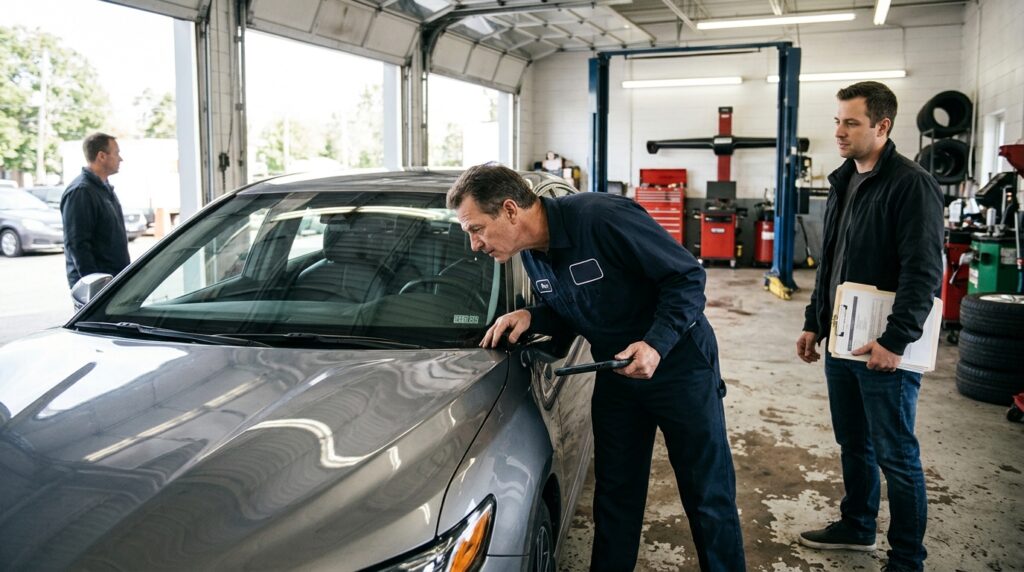
Buyers should compare the VIN shown in accessible vehicle locations with the number appearing on the title and registration documents.
For many passenger vehicles, one VIN location is visible through the lower windshield on the driver’s side.
Other identification labels may be present on the door jamb or in manufacturer-designated locations.
However, VIN placement varies by vehicle design.
Warning signs may include unexplained differences between identification numbers, suspicious alterations, or documents that do not correspond with the vehicle.
Do not attempt to remove identification plates or dismantle parts of the vehicle to investigate a VIN.
If you suspect tampering, stop the purchase process and seek appropriate professional or law-enforcement guidance.
The VIN should be checked before money changes hands, not after discovering a problem during registration.
How to Check a Used Vehicle’s History Before Buying
Investigating a used car involves combining official records, seller documentation, and physical inspection.
Each source provides different information.
A Practical Vehicle History and Inspection Checklist
Begin by asking the seller for the VIN and a copy of relevant title information.
If the seller refuses to provide basic identifying details, treat that as a reason for caution.
Check a vehicle history report.
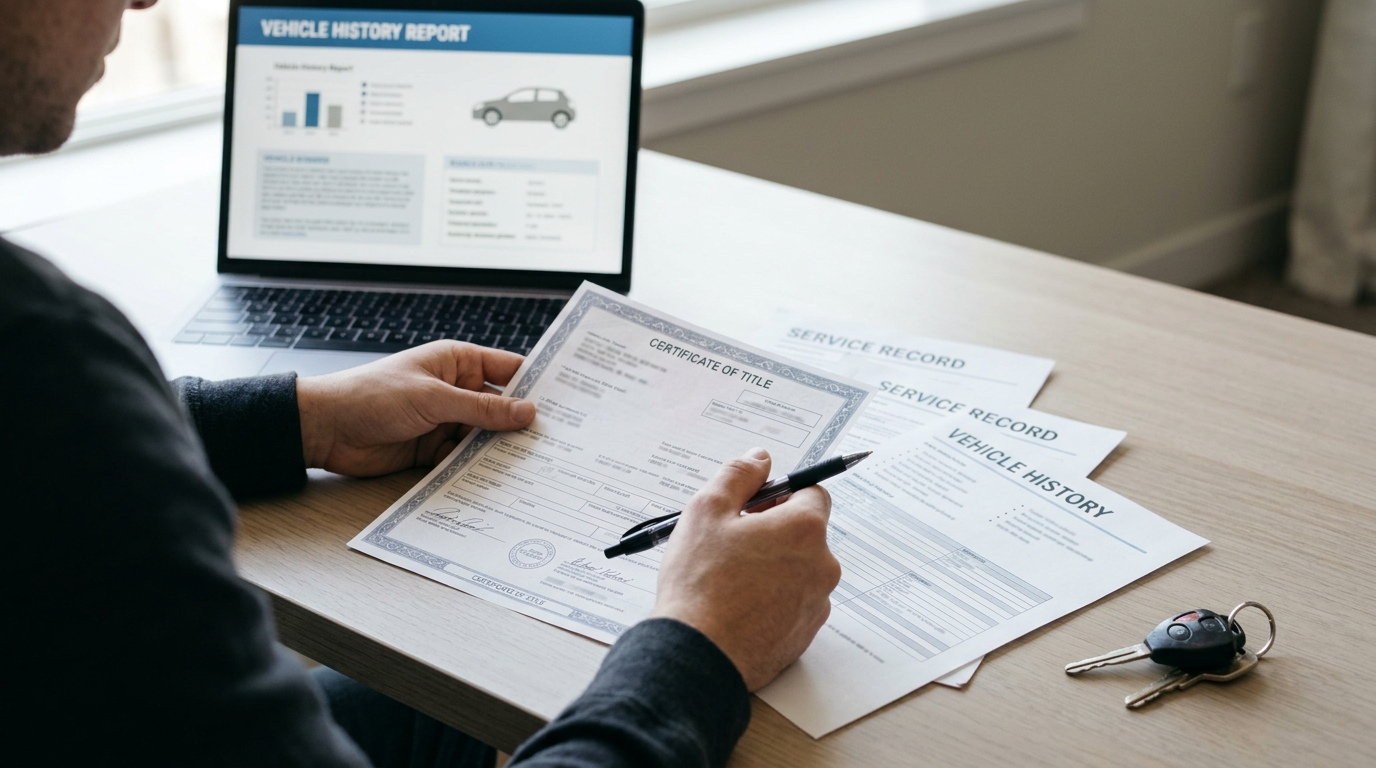
Use an approved NMVTIS report provider to review available title and brand information.
The system may include title records, salvage information, reported odometer readings, and certain junk or salvage-yard events.
However, NMVTIS does not provide a complete mechanical inspection or guarantee that every accident was reported.
Review what the report covers and whether it identifies the correct vehicle.
Compare the odometer readings.
Look at mileage recorded in service records, title documents, and vehicle history reports.
An unexplained decrease or contradiction deserves investigation.
However, individual records may contain clerical mistakes.
Do not immediately assume fraud when a single record looks unusual.
Ask for documentation that explains the discrepancy.
Review ownership and title status.
Confirm that the seller has authority to transfer the vehicle.
Ask about outstanding liens, missing titles, and any title brands.
Follow the title-transfer rules applicable in your state.
Do not accept vague promises that the title will become available sometime after full payment without understanding the risks.
Arrange an independent inspection.
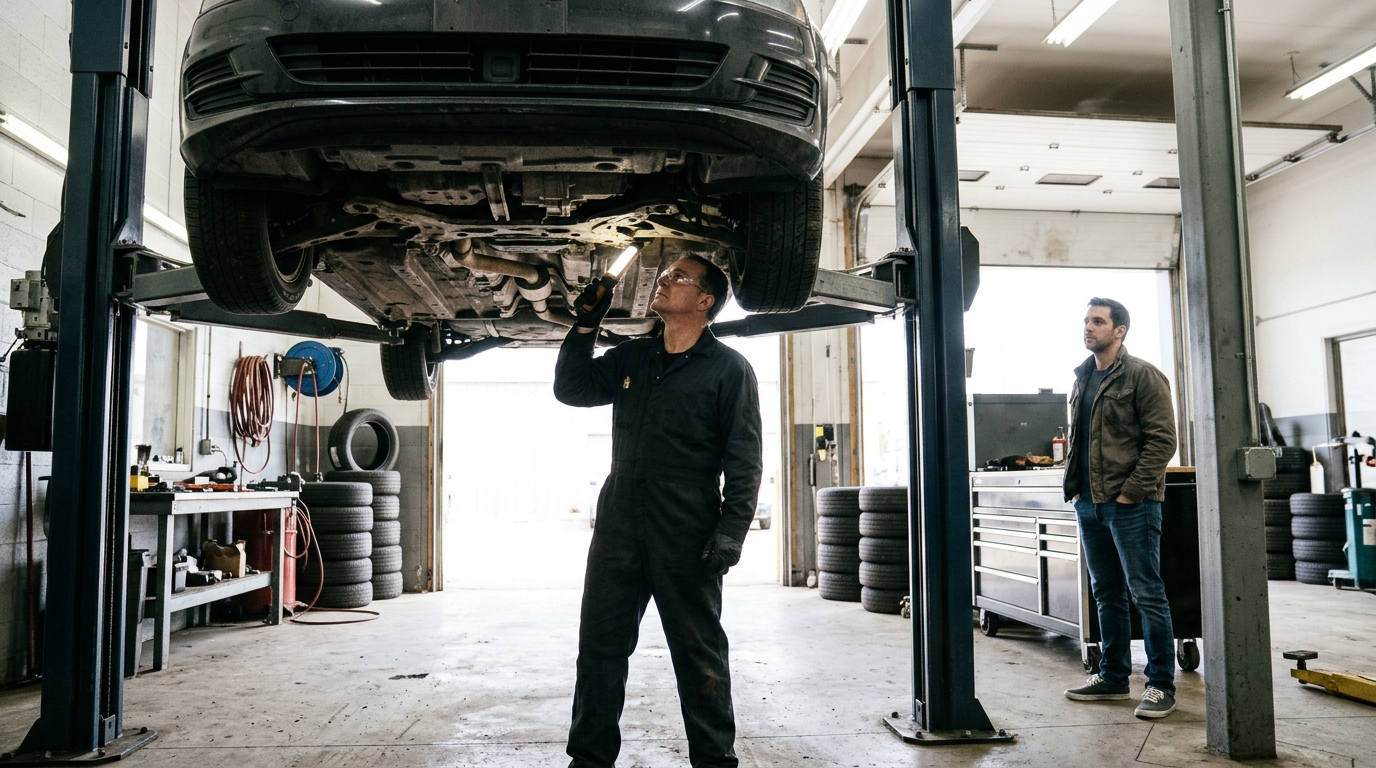
The Federal Trade Commission recommends an independent mechanical inspection before buying a used vehicle, even when it has a dealership inspection or certification.
An independent technician can identify current problems that may not appear in historical databases.
For example, the inspection may reveal worn suspension components, fluid leaks, improper repairs, or warning lights.
For vehicles with suspected collision damage, additional structural evaluation may be appropriate.
Ask for a written report and estimate of necessary repairs.
If the seller will not permit a reasonable independent inspection, consider another vehicle.
Check for recalls separately.
A title history report and safety recall lookup serve different functions.
Open recalls may not be resolved merely because a vehicle has a clean title.
Use the manufacturer’s official resources or NHTSA’s recall lookup to check for unresolved safety recalls.
Presta Cars also discusses this issue in its used-car recall and safety buying articles.
Do not confuse the absence of a recall with proof that the vehicle has no mechanical defects.
Be careful with unusually low prices.
A substantially discounted listing may be legitimate, but the reason for the lower price should be understood.
Compare similar vehicles based on mileage, model year, condition, title status, and equipment.
A vehicle with a rebuilt or salvage history may have a different market value from one without those designations.
However, price differences alone cannot determine whether a sale is fraudulent.
Protect yourself during online transactions.
Confirm the vehicle exists and can be inspected before transferring significant funds.
Be wary of sellers who pressure buyers to use unusual payment methods or bypass ordinary title documentation.
Never send identification documents to unverified contacts.
When buying across state lines, research registration, tax, inspection, and title requirements before finalizing the transaction.
Understand the limits of a clean history report.
Many vehicle events are never entered into a centralized database.
A privately repaired collision, for example, might not appear in a report.
That is why documentation, physical condition, and an independent inspection should be evaluated together.
Buyers can also review the FTC’s used-car buying recommendations.
Frequently asked questions
What is used car title washing?
It refers to improperly concealing or removing negative title history so that a vehicle appears to have a cleaner record.
Can a car with a rebuilt title be purchased legally?
Potentially, depending on state rules and the vehicle’s compliance. Buyers should investigate its history and actual condition.
Does a free VIN decoder show accident history?
No. NHTSA’s VIN decoder primarily identifies vehicle information encoded in the VIN.
Does a clean title guarantee no prior damage?
No. Some incidents may not be reflected in title records.
Should I get a pre-purchase inspection?
Yes. An independent inspection is an important complement to vehicle history research.
Final thoughts
Used car title washing and VIN fraud can create expensive problems for buyers who rely only on a seller’s description.
Verify the vehicle’s identity, investigate title brands, review available history, and arrange an independent inspection.
The strongest buying decision comes from multiple sources of evidence rather than a single report or an unusually attractive price.
For more guidance, explore the Presta Cars buying tips archive.
Editorial note: U.S. vehicle title laws vary by state. This article provides general consumer education as of October 2026.