
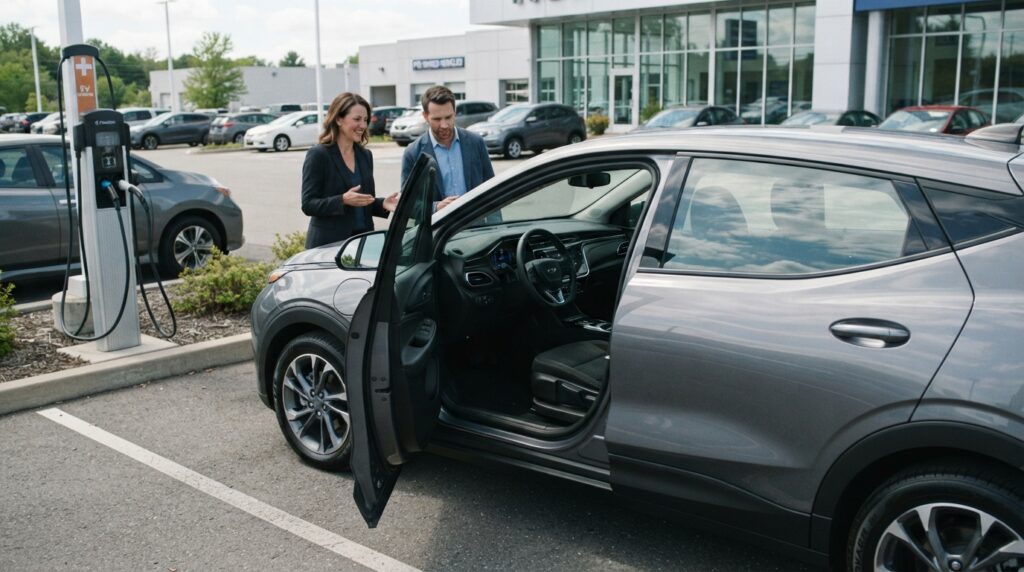
A used electric vehicle with 80,000, 100,000, or even more miles can look risky at first glance. For decades, used-car shoppers have treated high mileage as a warning sign because more miles usually mean more wear on engines, transmissions, cooling systems, exhaust components, and other moving parts. Electric vehicles change part of that equation.
New 2026 research is giving buyers a reason to look beyond the odometer. A large analysis commissioned by the British Vehicle Rental and Leasing Association and carried out by New AutoMotive examined 47.4 million MOT tests. The findings showed that, at higher mileage, electric cars were less likely to fail the roadworthiness test than petrol cars of similar age and mileage.
That does not mean every high-mileage EV is automatically a smart buy. An MOT does not measure battery state of health, charging speed, software problems, or remaining warranty coverage. Those details still matter. However, the data challenges the old assumption that a six-figure odometer reading should automatically push an electric car off your shopping list.
If you are comparing affordable pre-owned EVs in 2026, the smarter approach is to combine mileage with battery condition, maintenance records, tire wear, charging performance, and total ownership cost. That gives you a much clearer picture of whether a particular car is a bargain or a future expense.
What the Latest 2026 Data Says About High-Mileage Electric Cars
The September 2026 study is useful because it did not look at a few hundred vehicles or rely only on owner surveys. Researchers analyzed millions of official roadworthiness test records and compared failure rates while accounting for both vehicle age and mileage.
At lower mileage, the gap between EVs and petrol cars was small. The difference became more noticeable after roughly 60,000 miles. According to the study, EV failure rates then leveled off at around 16 percent while petrol and diesel failure rates continued to rise as mileage increased.
Why the 90,000-to-120,000-Mile Results Matter
Among vehicles between three and eight years old with 90,000 to 120,000 miles, 16.5 percent of EVs failed their MOT. The failure rate for petrol cars in the same mileage range was 22.1 percent. Above 120,000 miles, the reported failure rate was 16.0 percent for EVs compared with 23.5 percent for petrol vehicles.
Those numbers do not prove that every EV is more reliable in every ownership situation. The test is a roadworthiness inspection rather than a complete measure of long-term ownership reliability. Still, the result is important for used-car shoppers because it suggests that high mileage by itself may be a weaker warning sign for an electric vehicle than many buyers assume.
You can review the study summary through the BVRLA’s high-mileage EV durability research. When you compare vehicles, use the data as context, not as a substitute for a proper inspection.
Why an Electric Drivetrain Can Age Differently
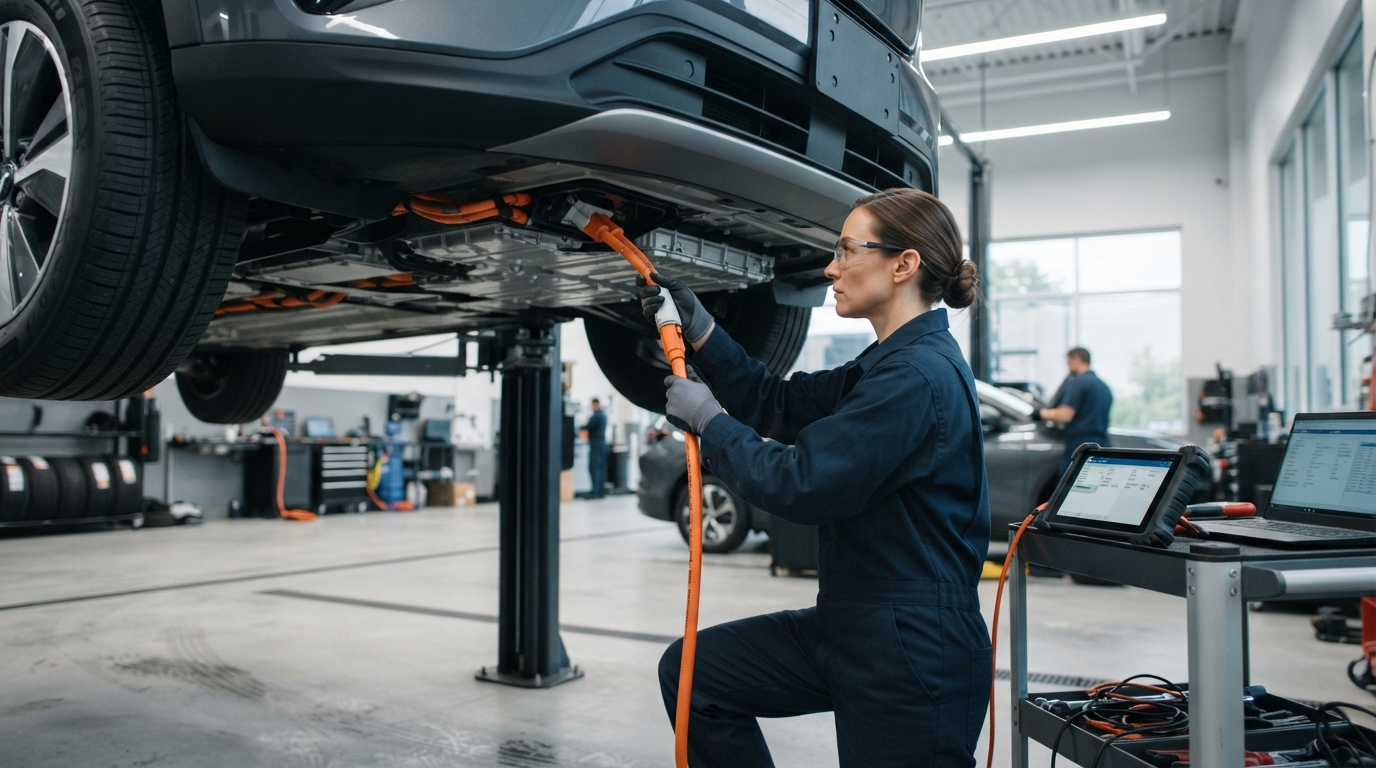
A battery-electric vehicle has fewer traditional powertrain components than a petrol car. There is no engine oil system, exhaust system, spark-plug maintenance, or multi-speed automatic transmission in the usual sense. An electric motor also has far fewer moving parts than an internal-combustion engine.
That simpler mechanical layout can remove several common sources of age-related repair. However, an EV still has suspension components, wheel bearings, air-conditioning systems, steering hardware, brakes, tires, electronics, and cooling systems. A simpler drivetrain does not make the entire vehicle maintenance-free.
What the Study Does Not Tell You
The biggest limitation is battery health. MOT testing does not measure the usable capacity of an EV battery, how quickly it charges, how much range it has lost, or whether it has experienced unusual degradation. The study also does not measure every software fault or every unscheduled repair an owner may face.
That is why a buyer should not read “lower MOT failure rate” as “nothing can go wrong.” Instead, treat it as evidence that a high-mileage EV can remain mechanically roadworthy even after the odometer reaches a number that might scare buyers away from a conventional used car.
Mileage Still Matters, but Battery Health Matters More
The odometer should remain part of your decision. Mileage can reveal how intensively a car has been used, and it can affect remaining warranty coverage, resale value, and wear on parts such as seats, suspension, tires, and wheel bearings. However, the battery deserves equal or greater attention on a used EV.
Presta Cars already covers this in our guide to pre-owned electric vehicle battery health in 2026. A higher-mileage car with a healthy battery, complete records, and proper maintenance can be a better purchase than a lower-mileage EV that has been neglected or poorly repaired.
Check Battery Health, Charging, and Warranty Coverage
Ask for a battery health report when one is available. Compare the car’s current usable range with what a similar model should realistically deliver. Test both normal charging and fast charging if the vehicle supports it. Also, verify whether the original battery warranty still applies to the next owner and whether mileage limits have already been reached.
Do not rely only on the range estimate shown on the dashboard. That number can change with temperature, driving style, recent trips, climate-control use, and software calculations. A diagnostic report or manufacturer-supported battery test gives you better information.
Also inspect the charge port for damage, confirm that charging cables are included when expected, and ask whether the car has had battery-related repairs or recalls. A clean history makes a high-mileage vehicle much easier to evaluate.
How to Decide Whether a High-Mileage Used EV Is Worth Buying
A smart used-car purchase comes from combining several signals instead of chasing one number. With an EV, that means checking mileage, battery condition, tire wear, service history, accident history, charging behavior, software functions, and the price compared with similar vehicles.
Start with the asking price. High mileage should usually be reflected in the value. A seller should not price a 100,000-mile EV as if it were a low-mileage example simply because recent research looks encouraging. The discount needs to compensate you for shorter remaining warranties, cosmetic wear, and the possibility that certain components are closer to replacement.
Next, compare the full ownership cost. Our guide to used car total ownership cost in 2026 explains why the cheapest listing can become expensive once insurance, financing, tires, maintenance, repairs, and registration are added. That rule applies strongly to EVs because a low purchase price can hide the cost of tires, charging equipment, or an out-of-warranty repair.
Use a Pre-Purchase Inspection Instead of Guessing From the Odometer
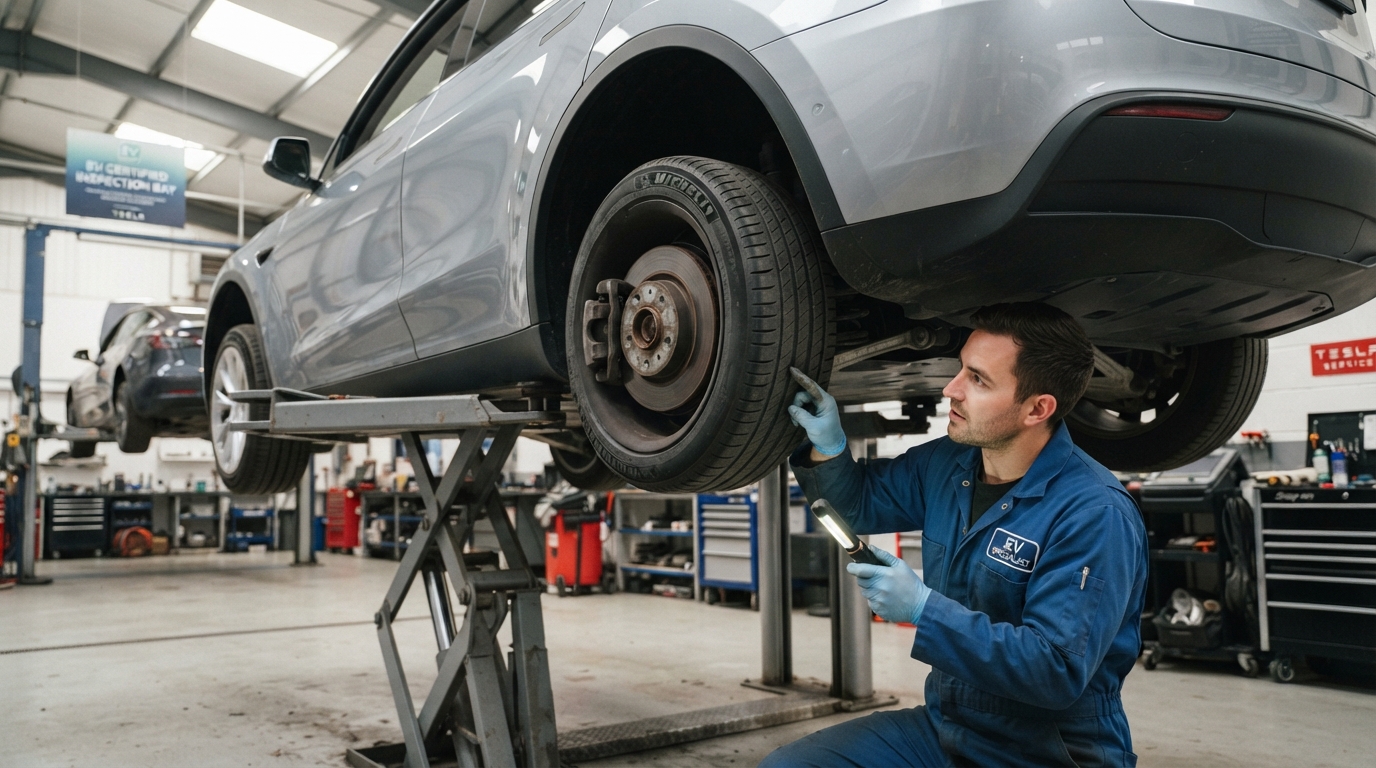
A professional inspection can tell you far more than mileage alone. Ask the technician to look at suspension wear, tire condition, brake corrosion, previous accident repairs, cooling-system leaks, underbody damage, and warning codes. Electric cars can place more demand on tires because of their weight and instant torque, so tire condition deserves close attention.
The 2026 BVRLA research also found more tire defects among EVs than petrol cars. That is a useful reminder that strong drivetrain durability does not eliminate normal wear items. A set of premium EV-rated tires can be expensive, so worn tires should affect the price you are willing to pay.
Look closely at brakes as well. Regenerative braking reduces how often friction brakes are used, which can help pad life. On the other hand, brake components can still corrode when they are used less frequently. During the test drive, listen for unusual noises and make sure braking feels smooth and predictable.
A High-Mileage EV Is a Good Buy Only When the Numbers Work
The strongest high-mileage EV purchase is not simply the car with the best test result. It is the one with a fair price, healthy battery, documented history, acceptable tire and suspension condition, useful remaining range, and ownership costs that fit your budget.
It is also worth comparing the vehicle with newer used EVs because prices across the pre-owned electric market can vary widely. Read our guide to why falling used EV prices can create opportunities for buyers before deciding that a high-mileage example is automatically the cheapest option.
If two vehicles are close in price, a lower-mileage model with more battery warranty may be the better value. If the high-mileage car is substantially cheaper and passes a careful inspection, the 2026 durability data gives you more reason to consider it rather than reject it immediately.
The biggest lesson is simple: stop using mileage as the only shortcut. Electric vehicles age differently from petrol cars, and the latest large-scale test data shows why used-EV shopping needs a different checklist. A six-figure odometer reading should trigger more questions, not an automatic no.
Check the battery. Test the charging system. Inspect the tires and brakes. Review the vehicle history. Confirm the warranty. Compare total ownership costs. When those pieces line up, a high-mileage used EV in 2026 can be a practical way to get modern technology and lower running costs without paying the price of a newer vehicle.