
Buying a hybrid isn’t scary—but skipping checks is expensive. Here’s the real-world checklist that protects your wallet.
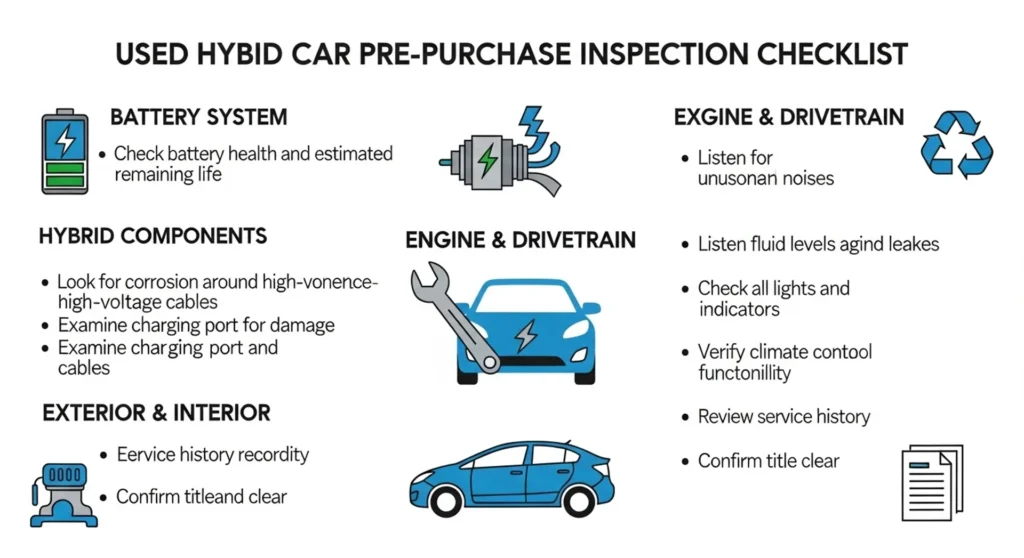
1) Battery condition (don’t guess—verify)
Hybrid batteries are designed for long service life, but you still want confirmation. Ask for:
-
Any available battery health report (dealer or diagnostic scan)
-
Proof the car isn’t sitting unused for long periods
-
Dashboard warning lights history (hybrid system, engine, battery)
This is not the same as EV battery evaluation (your EV post is deeper there), but the principle is the same: battery condition impacts long-term value.
2) Maintenance history beats low mileage
A “low-mileage deal” can be a trap if maintenance was ignored. Ideally you want records showing:
-
Routine oil changes
-
Cooling system service (important for hybrid efficiency and longevity)
-
Brake servicing (hybrids use regen braking, but brakes still matter)
-
Transmission fluid service if recommended
Need a broader inspection mindset? This internal guide supports the process:
https://www.prestacars.com/top-tips-for-buying-a-quality-pre-owned-vehicle/
3) Test drive for smooth transitions
During the drive, pay attention to:
-
Smooth engine on/off behavior (no harsh shuddering)
-
Consistent acceleration (no hesitation)
-
Predictable braking feel (regen should feel smooth, not grabby)
-
No weird noises from the engine bay during transition
4) Get a pre-purchase inspection (PPI)
A good PPI can uncover issues you won’t see in a quick walk-around:
-
Stored diagnostic codes
-
Leaks, worn bushings, suspension wear
-
Signs of poor-quality repairs from past accidents
Will a used hybrid really save you money?
Usually, yes—but only if you buy the right one.
A hybrid may cost a bit more upfront than a similar gas-only model, but can pay you back through:
-
Fuel savings over time
-
Strong resale demand
-
Potentially reduced brake wear thanks to regenerative braking
But here’s the truth: financing can wipe out fuel savings if you accept a bad loan.
To keep the “total cost” under control, connect readers to your financing content (from your blog index):
Find it on your blog list here: https://www.prestacars.com/blog/
Who should buy a used hybrid in 2026?
Used hybrids are especially strong for:
-
City commuters dealing with daily traffic
-
Families who want better fuel economy without giving up space
-
Drivers who rack up miles (rideshare/delivery)
-
Buyers not ready for full EV ownership (charging limitations)
If you’re shopping strictly by budget, start here:
https://www.prestacars.com/category/affordable-cars/
Common used-hybrid mistakes to avoid
-
Buying based only on monthly payment
It’s easy to “afford” the payment and still overpay long-term. -
Skipping inspection because it “drives fine”
Hidden codes and deferred maintenance are where hybrids get expensive. -
Ignoring tires
Incorrect or worn tires hurt ride comfort and fuel economy. -
Not checking ownership history
A well-documented car is usually a better buy than a mystery “deal.”
Final thoughts: why this trend matters for buyers in 2026
Hybrids are booming because they’re the most practical bridge between gas and full electric. Market data backs up what buyers are doing: hybrids remain a huge share of new registrations in major regions, and industry outlooks keep highlighting hybrid growth as EV adoption faces real-world friction.