
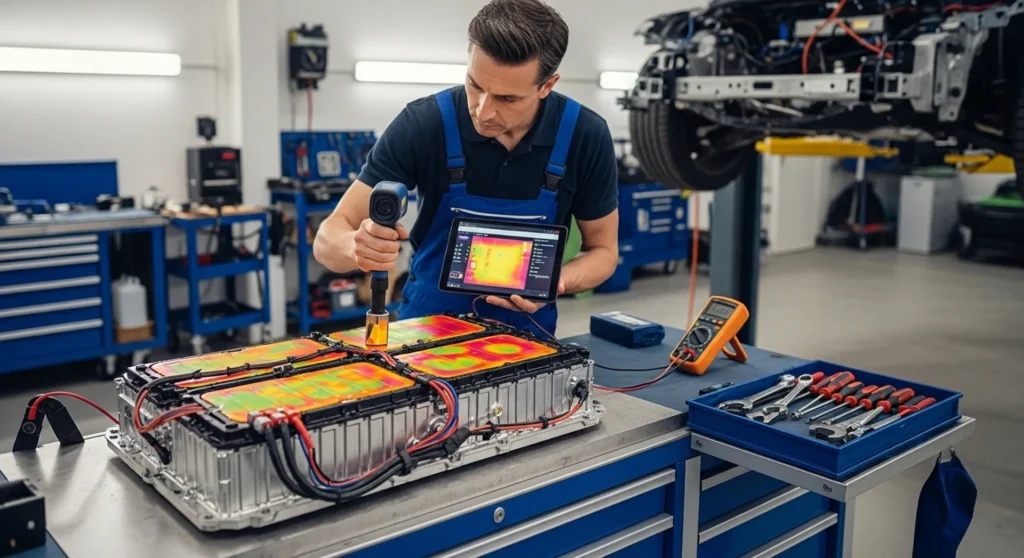
Buying a pre-owned electric vehicle is no longer a fringe decision—it’s a smart, cost-effective move for many drivers in 2026. However, one concern continues to dominate buyer hesitation: battery health. Unlike traditional used cars where engine wear is the main issue, electric vehicles live and die by the condition of their battery pack.
Understanding pre-owned electric vehicle battery health can help you avoid costly mistakes, negotiate better prices, and confidently choose an EV that will serve you well for years. This guide breaks down everything you need to know before you buy.
Why Battery Health Matters More Than Mileage
In gas-powered vehicles, mileage is often the primary indicator of wear. In electric vehicles, battery health is the real metric that determines range, performance, and long-term value. A high-mileage EV with a healthy battery can outperform a low-mileage one that was poorly maintained.
Battery health affects:
- Driving range per charge
- Charging speed and efficiency
- Resale value
- Overall vehicle reliability
What Battery Degradation Really Looks Like
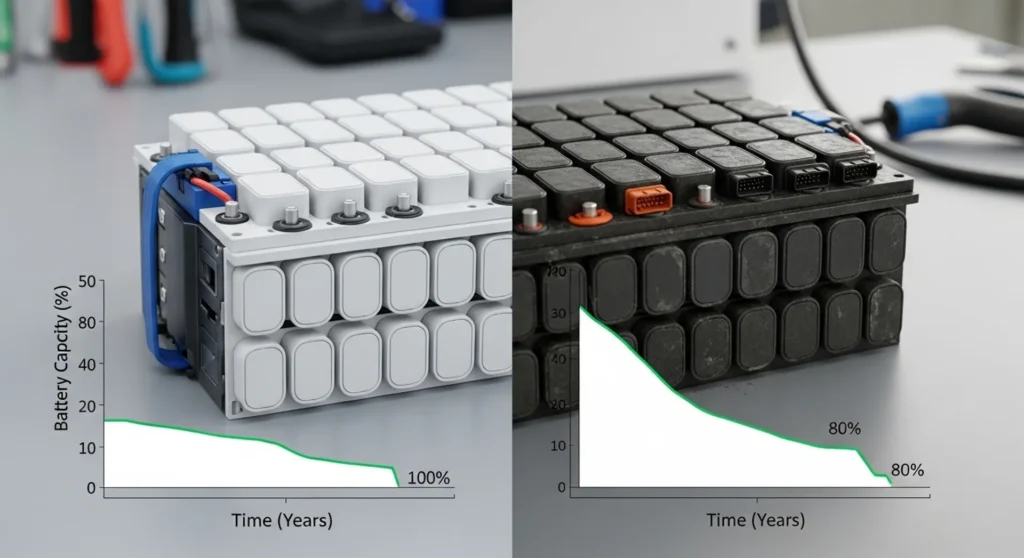
Battery degradation is gradual. Most modern EVs lose about 1–2% of battery capacity per year under normal conditions. After five years, a well-maintained battery may still retain 90% or more of its original capacity.
Factors that accelerate degradation include:
- Frequent fast charging
- Extreme heat exposure
- Consistently charging to 100%
- Letting the battery drain to 0% repeatedly
How to Check Pre-Owned Electric Vehicle Battery Health
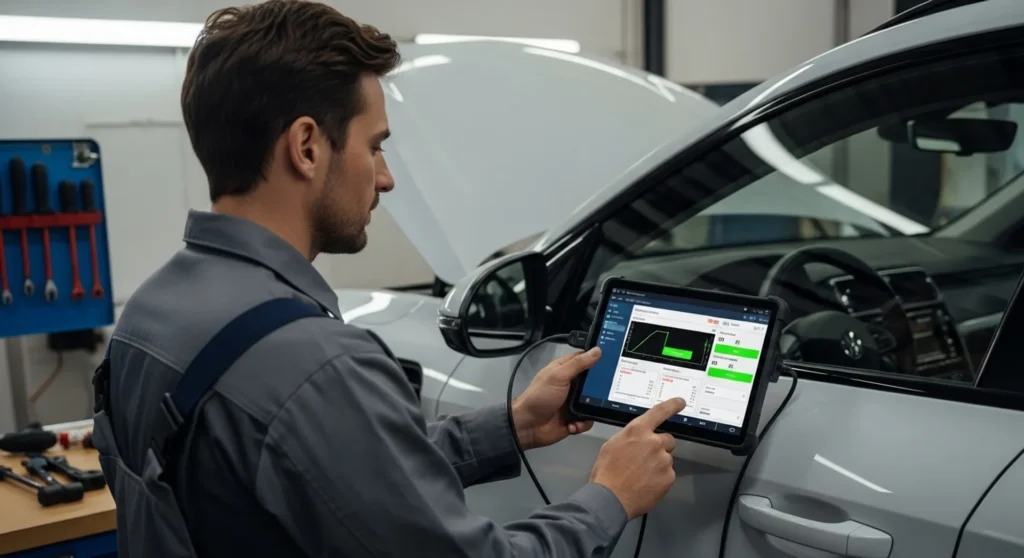
Before purchasing, always request a battery health report. Many EVs allow dealers or technicians to retrieve this data through onboard diagnostics.
Key methods include:
- Manufacturer battery health reports
- Third-party diagnostic scans
- Range comparison against factory specs
If you’re already researching how to inspect used vehicles, this pairs well with our guide on Top Tips for Buying a Quality Pre-Owned Vehicle.
Battery Warranties: What Transfers and What Doesn’t
Most EV manufacturers offer battery warranties ranging from 8 to 10 years or up to 100,000 miles. The good news? These warranties usually transfer to second owners.
Always verify:
- Remaining warranty duration
- Mileage limits
- Minimum capacity thresholds covered
A transferable warranty significantly reduces your risk when buying a used EV.
Real-World Range vs. Advertised Range
Don’t rely solely on dashboard estimates. Ask for real-world driving data if available. A vehicle advertised with 250 miles of range may realistically deliver 210–225 miles depending on battery health.
This is especially important if you’re comparing affordability and value, as discussed in our affordability guide.
Are Battery Replacements a Deal Breaker?
Battery replacement costs have dropped significantly. While still expensive, replacements are becoming less common thanks to improved battery chemistry and thermal management systems.
For context, the U.S. Department of Energy tracks ongoing battery cost reductions and longevity improvements, making pre-owned EV ownership more viable than ever.
Learn more about EV battery advancements from the U.S. Department of Energy.
Who Should Consider a Pre-Owned EV in 2026?
Pre-owned electric vehicles are ideal for:
- Urban commuters
- Families with home charging access
- Drivers seeking lower maintenance costs
- Buyers prioritizing sustainability
If you’re weighing long-term value, our article on why buying a pre-owned car can be the best investment adds further perspective.
Final Thoughts: Smart EV Buying Starts with Battery Knowledge
Pre-owned electric vehicle battery health should never be an afterthought. With proper inspection, warranty verification, and realistic expectations, buying a used EV in 2026 can be one of the smartest automotive decisions you make.
As battery technology continues to improve and prices stabilize, informed buyers who understand battery health will enjoy the biggest advantages in the pre-owned EV market.